Categories

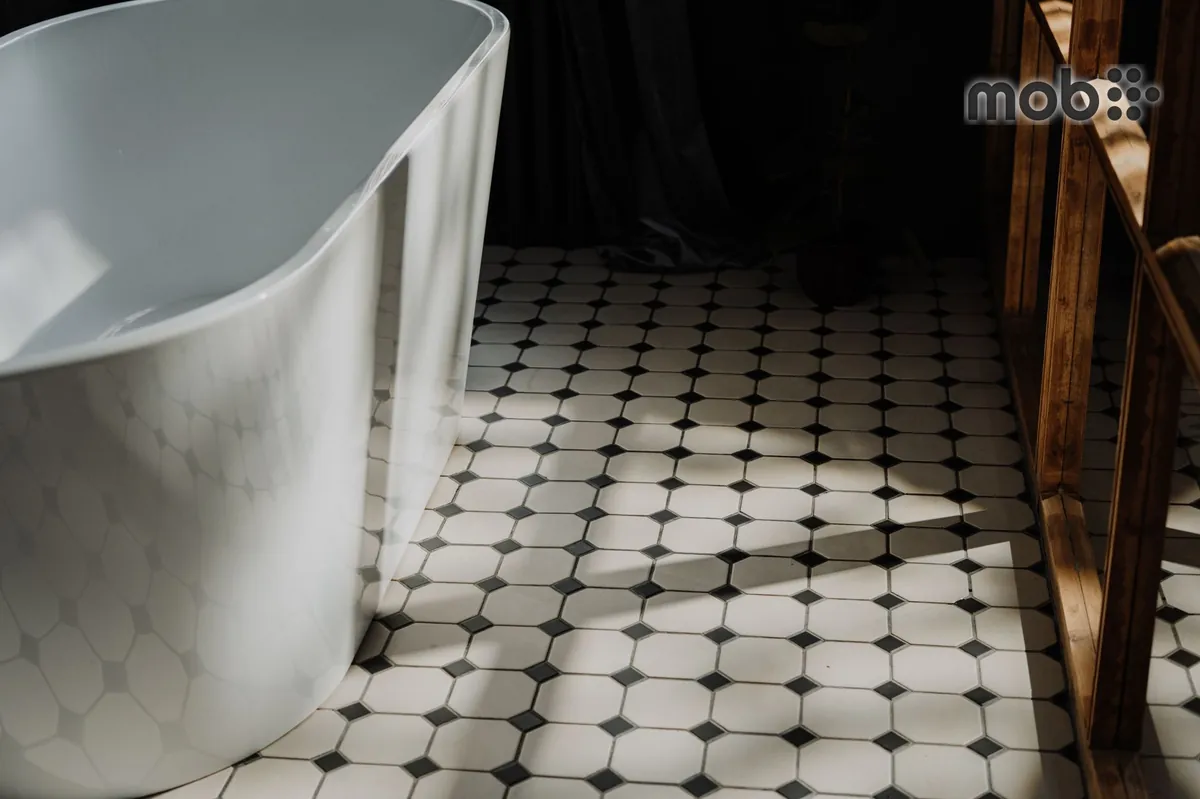
If your tile dealer is trying to convince you there is a huge quality gap between Kajaria and Somany, be a little skeptical, that pitch usually has a margin behind it. Kajaria is India's largest tile maker by volume and Somany is right behind it as the other major national name; both are BIS-certified and both cover every category from bathroom floor tiles to large-format living room vitrified tiles.
The things that actually decide how your floor looks and holds up: the tile category (ceramic, vitrified, or GVT), the PEI abrasion rating for foot traffic, anti-skid rating for wet areas, and whether every box you buy comes from the same production batch. Get those right and either brand will serve you well for fifteen years or more.
Where Kajaria Leads
Kajaria has been India's largest tile manufacturer for years, with the widest distribution network and the deepest design catalogue, from budget ceramic to premium glazed vitrified tiles (GVT) and large-format slabs. That scale means your local showroom almost certainly carries a full Kajaria range in stock, not just a sample board.
Its digital printing technology on GVT tiles produces some of the most convincing marble and wood-look finishes in the market, which is why premium living-room floors lean toward Kajaria's higher lines.
Where Somany Leads
Somany has been in the tile business since the 1960s and is genuinely Kajaria's closest competitor on both quality and range. Many buyers find Somany's bathroom and kitchen tile collections, especially in mid-range price points, offer sharper designs for the money, and its anti-skid bathroom floor tiles are a strong, reliable category.
Tile Type Matters More Than the Logo
Ceramic tiles are lighter and cheaper, fine for walls and low-traffic areas. Vitrified tiles are denser, more water-resistant and the standard choice for living room and bedroom floors today. GVT (glazed vitrified tiles) sit at the premium end with the best finish quality. Both brands make all three, so choose the category for the room first.
For bathroom and balcony floors, always check the anti-skid or R-rating on the box; a beautiful tile that turns your bathroom into a skating rink is not a bargain at any price, whichever brand it carries.
The Batch Number Trick Nobody Tells First-Time Buyers
Tiles from different production batches, even the same design code, can carry a faint shade or size variation. Order your full room quantity plus 10 percent wastage in one go, and insist every box carries the same batch number printed on the carton. This one habit prevents the single most common tile-installation complaint: a visible patch of mismatched shade in the middle of the floor.
Kajaria vs Somany at a Glance
| Factor | Kajaria | Somany |
|---|---|---|
| Market position | India's largest tile maker | Major national brand, close second |
| Design range | Very wide, strong in premium GVT | Wide, strong in mid-range bathroom tiles |
| Availability | Excellent, deepest showroom presence | Excellent in most cities |
| Anti-skid bathroom tiles | Available across price points | Strong, well-regarded category |
| Large-format slabs | Available in premium lines | Available in premium lines |
| Price positioning | Comparable, category-dependent | Often sharper in mid-range designs |
Which one to buy
- Pick the tile type per room first: ceramic for walls, vitrified for floors, GVT for premium finishes.
- For bathrooms and balconies, check the anti-skid or R-rating printed on the box before checking the design.
- Check the PEI rating for high-traffic areas like the living room and entrance.
- Order full room quantity plus 10 percent extra, all from the same batch number.
- Compare per-box rates for the same size and finish across both brands before finalising.
Compare current options and place orders onMadoverbuildings (MOB).
Pricing Snapshot
| Product | Live Price | MRP / RFQ | Buying Note |
|---|---|---|---|
| Kerakoll Superbio Mineral Tile Adhesive, Grey, 30Kg Bag | Rs 395.20 / Unit | RFQ Rs 391.40 | Stock: 15; Delivery: QWIK; Unit: Unit |
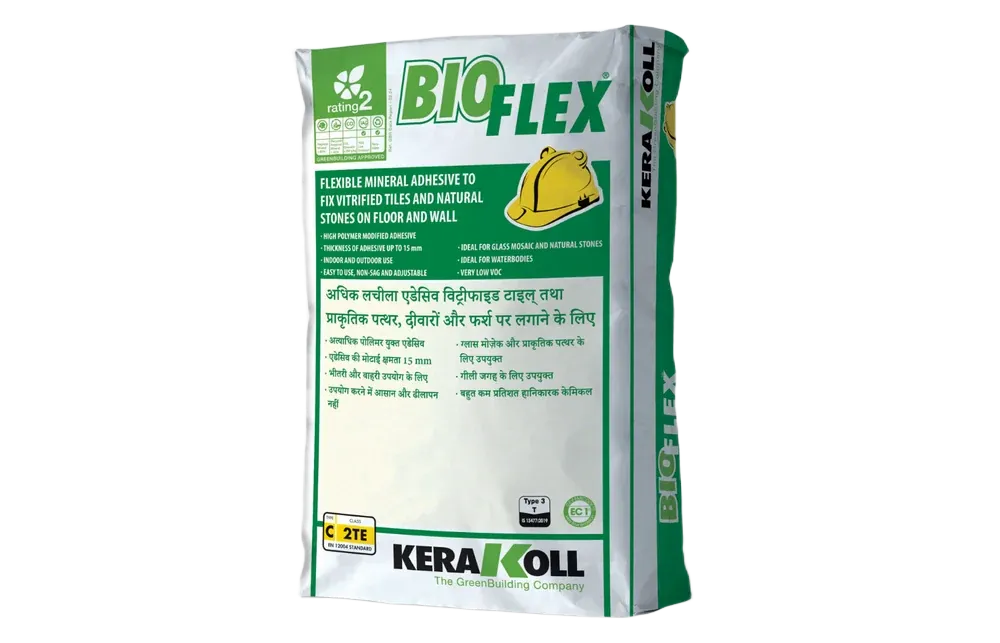
| Kerakoll Bioflex Flexible Tile and Natural Stone Adhesive, White, 20Kg Bag | Rs 1,009.05 / Unit | RFQ Rs 964.84 | Stock: 15; Delivery: QWIK; Unit: Unit |
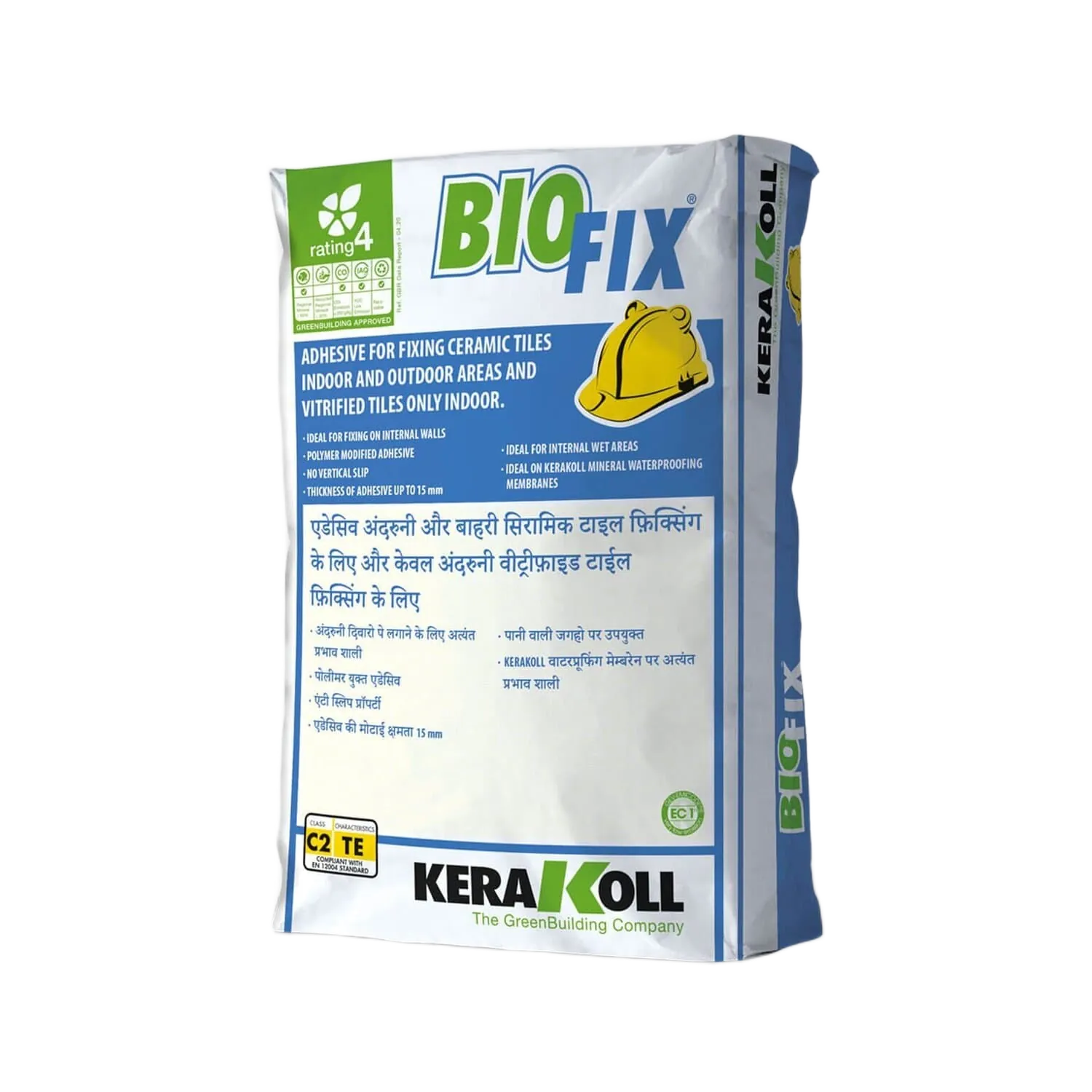
| Kerakoll Biofix Polymer-Modified Tile and Stone Adhesive, White, 20Kg Bag | Rs 678.30 / Unit | RFQ Rs 648.58 | Stock: 15; Delivery: QWIK; Unit: Unit |
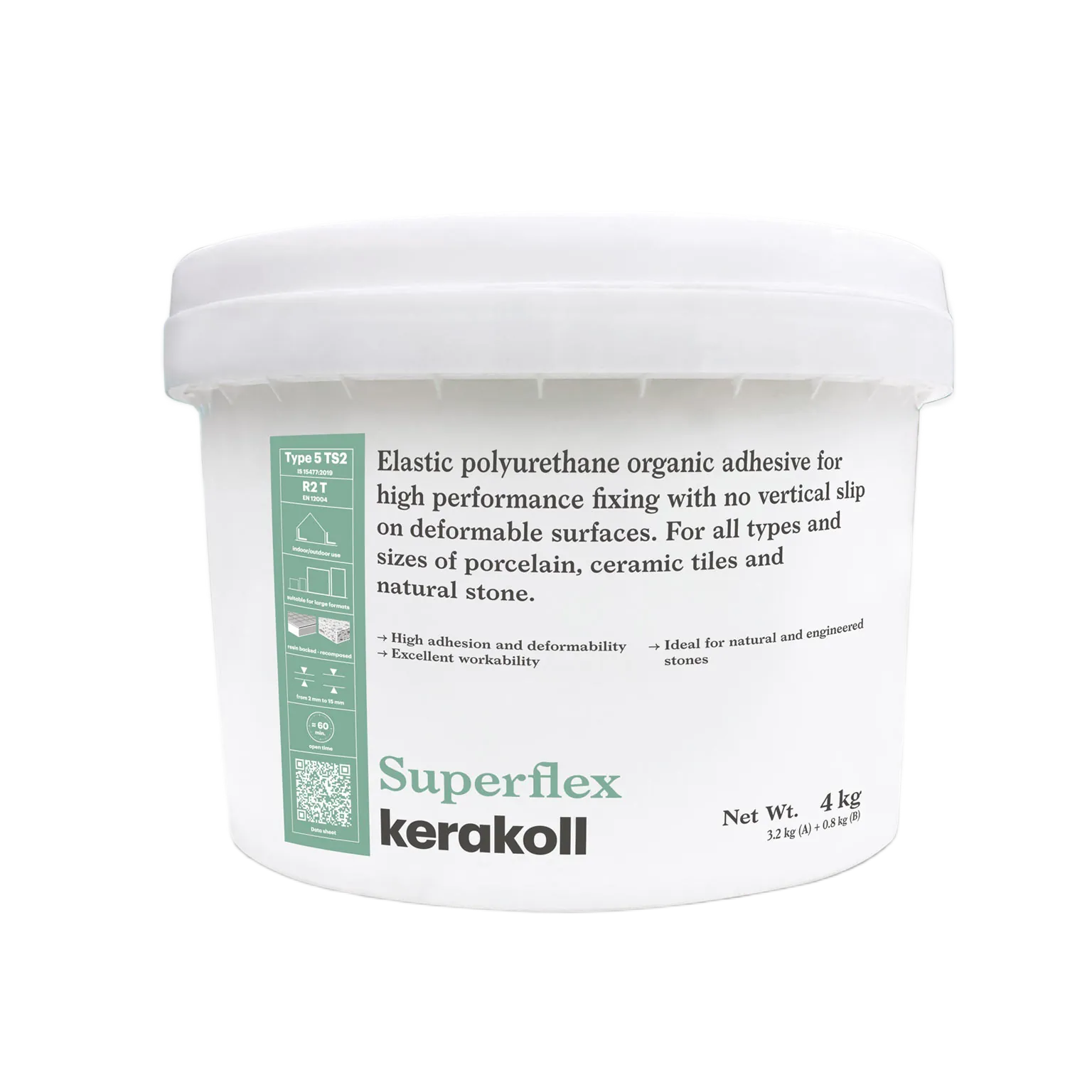
| Kerakoll Superflex Two-Component Elastic Tile and Stone Adhesive, 4Kg Monopack | Rs 1,803.90 / Unit | RFQ Rs 1,724.87 | Stock: 10; Delivery: QWIK; Unit: Unit |
Don't substitute these
- Mixing batch numbers on one floor is the single biggest cause of a visible shade-mismatch patch later.
- A glossy tile looks stunning in the showroom and turns dangerous the moment it gets wet in a bathroom. Match the finish to the room, not the display lighting.
- Buy at least one extra box per room and store it; matching a broken tile two years later from a discontinued batch is nearly impossible.
- Large-format tiles need a flatter subfloor and skilled laying; a cheap mason on expensive slabs wastes the tile's whole design advantage.
- Tile adhesive quality affects longevity as much as the tile itself; do not let the mason substitute a cheaper adhesive to save a small amount.
How This Plays Out on Madoverbuildings (MOB)
On Madoverbuildings (MOB), tile orders from Bengaluru apartments regularly split by room the same way this article suggests: GVT from the premium Kajaria line for the living room, anti-skid Somany tiles for the bathrooms. Ordering the full room quantity together on MOB keeps every box on the same batch, delivered to site in one trip.
Relevant Products to Compare


Frequently Asked Questions
Kajaria or Somany, which is better for home flooring?
Both are BIS-certified national leaders and genuinely close in quality. Kajaria has the wider design catalogue and largest showroom presence, while Somany is often sharper on price for mid-range bathroom and kitchen designs. Pick the design and tile type that fits the room first.
Which brand has better bathroom tiles?
Both offer strong anti-skid bathroom ranges; Somany's mid-range bathroom collections are widely regarded as excellent value, while Kajaria offers a broader spread from budget to premium. Always confirm the anti-skid rating regardless of brand before buying.
What is the difference between ceramic and vitrified tiles?
Ceramic tiles are lighter, more porous and suited to walls or low-traffic areas. Vitrified tiles are denser, less water-absorbent and the standard choice for floors today. GVT (glazed vitrified) sits at the premium end with the best surface finish and print quality.
Is Kajaria more expensive than Somany?
Not consistently. At the premium GVT and large-format end, Kajaria's flagship lines can run higher, but in mid-range ceramic and vitrified categories the two brands are often very close, with Somany sometimes sharper on specific bathroom designs.
What is PEI rating and why does it matter?
PEI rating measures a tile's resistance to surface abrasion from foot traffic, rated roughly from light residential use to heavy commercial use. For living rooms and entrances, a mid-to-high PEI rating from either brand keeps the glaze looking new for longer.
Why do tiles from the same design look slightly different sometimes?
Small shade and dimension variations occur between production batches, even for the identical design code. Buying your full room quantity from one batch number, printed on the carton, avoids a visible mismatch patch on the finished floor.
Which tiles are safest for a bathroom floor?
Matte or textured tiles with a clear anti-skid or R-rating on the box, rather than glossy finishes, are the safer choice for wet bathroom and balcony floors. Both Kajaria and Somany sell dedicated anti-skid ranges for exactly this purpose.
How much extra tile should I order beyond the room area?
Order roughly 10 percent extra to cover cutting wastage, breakage during transport and future repairs, from the same batch as the main order. Keeping one spare box aside after installation saves a lot of trouble if a tile ever cracks later.