Categories

For nine out of ten Bengaluru apartments, buy the 3kW instant geyser. It is the only safe choice on the wiring your builder actually pulled through the ceiling slab.
A 3kW unit draws roughly 13 amps under load. That sits comfortably inside the safe thermal limits of a genuine 2.5 sq mm copper wire and a standard 16A C-curve MCB. A 4.5kW unit draws nearly 20 amps continuous current. It promises steaming hot water in seconds, but unless you ran a dedicated 4 sq mm home-run wire straight to the distribution board during your interior civil work, it will cook your switch points, weld plug pins into their sockets, and trip your main flat breaker.
The mistake is walking into an appliance showroom in Marathahalli or Jayanagar, looking only at the wattage and litre rating on the cardboard box, and assuming your bathroom wall point can handle whatever you hang on the hook. It cannot.
The math behind the scorched socket: 13 Amps vs 19.5 Amps
Single-phase domestic voltage in Bengaluru hovers between 220V and 240V, though during evening peak hours in high-density pockets like Whitefield or Electronic City, it can easily dip toward 215V. Simple electrical physics dictates current: Watts divided by Volts equals Amperes.
Take a 3000W heating element running at 230V. It pulls approximately 13.04 amps. Standard 16A modular sockets and 16A single-pole MCBs are built specifically for this load tier. Even with small resistance bumps across terminals, the operating current stays below the continuous 80 percent safety threshold of the circuit components.
Now look at a 4500W heating element. At 230V, that unit pulls 19.56 amps. If your line voltage drops to 215V on a cold January morning, the current draw creeps past 20.9 amps. That immediately blows past the design rating of any standard 16A wall socket, 16A plug top, and 16A breaker. When current exceeds contact capacity, electrical resistance creates concentrated thermal energy. The brass terminals expand, oxidize, lose spring tension, and begin to arc invisibly inside the back box. That is why so many bathroom switchplates turn dull yellow, then brown, and eventually smell like fishy, burning phenolic resin.
Where 4.5kW destroys standard builder-grade wiring
In a typical multi-story tower built across Bengaluru in the last decade, electrical contractors pull 2.5 sq mm FR (Flame Retardant) copper wires for designated power points in bathrooms and kitchens. In low-budget or rushed finishing packages, that 2.5 sq mm line is not even an exclusive run. It frequently loops through an adjacent bedroom power point or shares a 20mm PVC conduit with two other 1.5 sq mm lighting circuits.
Running three or four current-carrying conductors through a single concealed pipe kills their heat dissipation. Electrical engineers call this derating. A 2.5 sq mm multi-strand copper wire that handles 20 amps in free air might safely carry only 14 or 15 amps when bundled inside a hot, plastered brick wall. Hook a 4.5kW instant geyser drawing 20 amps onto that shared 2.5 sq mm bundle, and the copper core runs well over 70 degrees Celsius.
Over two seasons, that internal heat bakes the PVC insulation brittle. The insulation shrinks back from terminal ends, exposing bare copper inside conduit elbows where you cannot see it. Eventually, during a humid monsoon or a steamy shower session, moisture penetrates the micro-cracks in the brittle insulation, resulting in dead phase-to-neutral shorts that require breaking open finished bathroom tiles to fish out melted wire strands.
The winter water reality: flow rate versus temperature rise
The sole reason homeowners insist on 4.5kW units is the search for a continuous, steaming overhead shower. An instant geyser has a tiny pressure tank, usually 1 to 3 litres. It heats water dynamically as it passes over the bare immersion coil.
During December and January in Bengaluru, borewell and rooftop overhead tank water often drops to 16 or 17 degrees Celsius. To get comfortable bathing water at 38 degrees Celsius, the heating element must supply a temperature rise of more than 20 degrees.
A 3kW geyser can deliver that 20-degree jump only if you throttle the water tap down to roughly 2 to 2.5 litres per minute. That is perfect for bucket baths or washing hands at a vanity basin. If you open a standard overhead rain shower delivering 8 to 10 litres per minute, the water simply moves through the 3-litre tank too fast to collect heat. It comes out lukewarm.
A 4.5kW unit raises the flow rate to roughly 3.5 to 4 litres per minute for that same temperature jump. It is an improvement, but it is still insufficient for high-flow overhead showers, which need a 15L or 25L storage geyser. Buying a 4.5kW instant unit to run a luxurious shower gives you the worst of both worlds: water that still feels thin and cool, paired with an electrical line running dangerously hot.
The deadly breaker trap: slapping a 25A MCB on 2.5 sq mm wire
When a homeowner plugs in a new 4.5kW geyser and the 16A breaker trips after four minutes of running, the local electrician almost always suggests the same lazy shortcut: swap the 16A breaker for a 25A or 32A MCB in the distribution box.
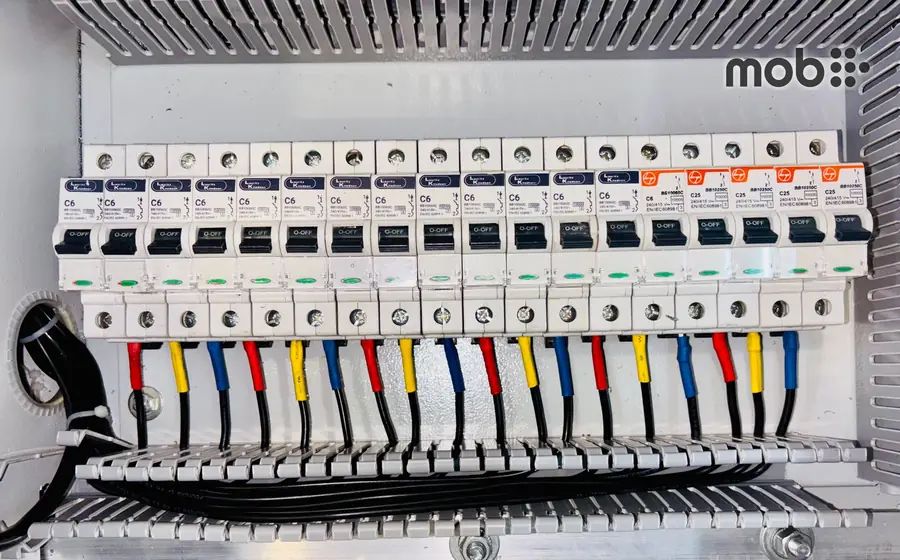
This is the single most dangerous electrical mistake made on residential finishing sites. A circuit breaker is not installed to protect your geyser. It is installed to protect the copper wire hidden inside your wall from catching fire before the breaker trips.
A 2.5 sq mm wire cannot safely carry 25 amps continuously. If you install a 25A MCB on that circuit, the wire becomes the fuse. The copper will overheat, the insulation will liquefy and catch fire inside the conduit, and the 25A breaker will sit happily closed because it detects nothing wrong with a 20-amp load. If you intend to run 4.5kW, you must pull dedicated 4 sq mm copper conductors from the bathroom terminal directly to the distribution board, protected by a dedicated 20A or 25A C-curve MCB, with zero loop joints in between.
Hardwiring versus plug tops: how to terminate high-draw points
If you do have the correct 4 sq mm wiring and an independent 25A circuit for a 4.5kW geyser, stop using standard 3-pin plug tops. The brass pins on standard domestic plugs rely on friction contact inside stamped sheet-metal socket leaves. Over time, steam and moisture cause micro-corrosion on those contact surfaces, increasing electrical resistance right at the plug face.
For 4.5kW loads, the professional method is dispensing with the plug entirely. Terminate the supply wire through a heavy-duty 20A or 25A Double Pole (DP) switch, and route the appliance flex cord into the wall box using a proper modular cable outlet plate. This allows the internal connections to be locked mechanically under solid screw clamps rather than sliding pins.
For standard 3kW installations running on 2.5 sq mm wire, a high-grade 16A switched socket is acceptable, provided the terminal screws are torqued down firmly on double-folded copper wire strands. Strands that are carelessly snipped or twisted loosely under the screw clamp will hot-spot within six months of use.
3kW vs 4.5kW Instant Geyser Technical & Site Requirements
| Option | Best for | Watch out | When to choose |
|---|---|---|---|
| 3kW Instant Geyser | Bucket baths, kitchen sinks, powder room handwash basins | Flow must be kept low (under 2.5 L/min) during cold Bengaluru mornings for hot water | Default choice for existing flats with standard 2.5 sq mm concealed wiring and 16A sockets |
| 4.5kW Instant Geyser | Faster bucket filling and hand showers in newly renovated bathrooms | Pulls nearly 20A; burns 16A sockets and melts 2.5 sq mm bundled wiring | Only when you have pulled an independent 4 sq mm line directly to a 20A/25A DP breaker |
Which one to buy
- Open your apartment distribution board cover and read the rating printed on the bathroom geyser MCB: if it says C16 or B16, buy a 3kW geyser.
- Inspect the physical wire inside the bathroom switch box; if the printed sheath reads 1.5 sq mm or 2.5 sq mm, do not exceed a 3kW appliance.
- Verify your total flat sanctioned load on your latest BESCOM electricity bill; if your total sanctioned demand is 3kW or 4kW, a 4.5kW heater will trip the main incoming meter breaker whenever other appliances run.
- If your heart is set on 4.5kW, hire an electrician to fish a continuous, unjointed 4 sq mm phase, neutral, and earth run from the distribution board through the conduit to the geyser point.
- Replace the standard 16A 3-pin wall socket with a 25A double-pole switch and a dedicated cable outlet plate for mechanical wire termination.
Compare current options and place orders onMadoverbuildings (MOB).
Pricing Snapshot
| Product | Live Price | MRP / RFQ | Buying Note |
|---|---|---|---|
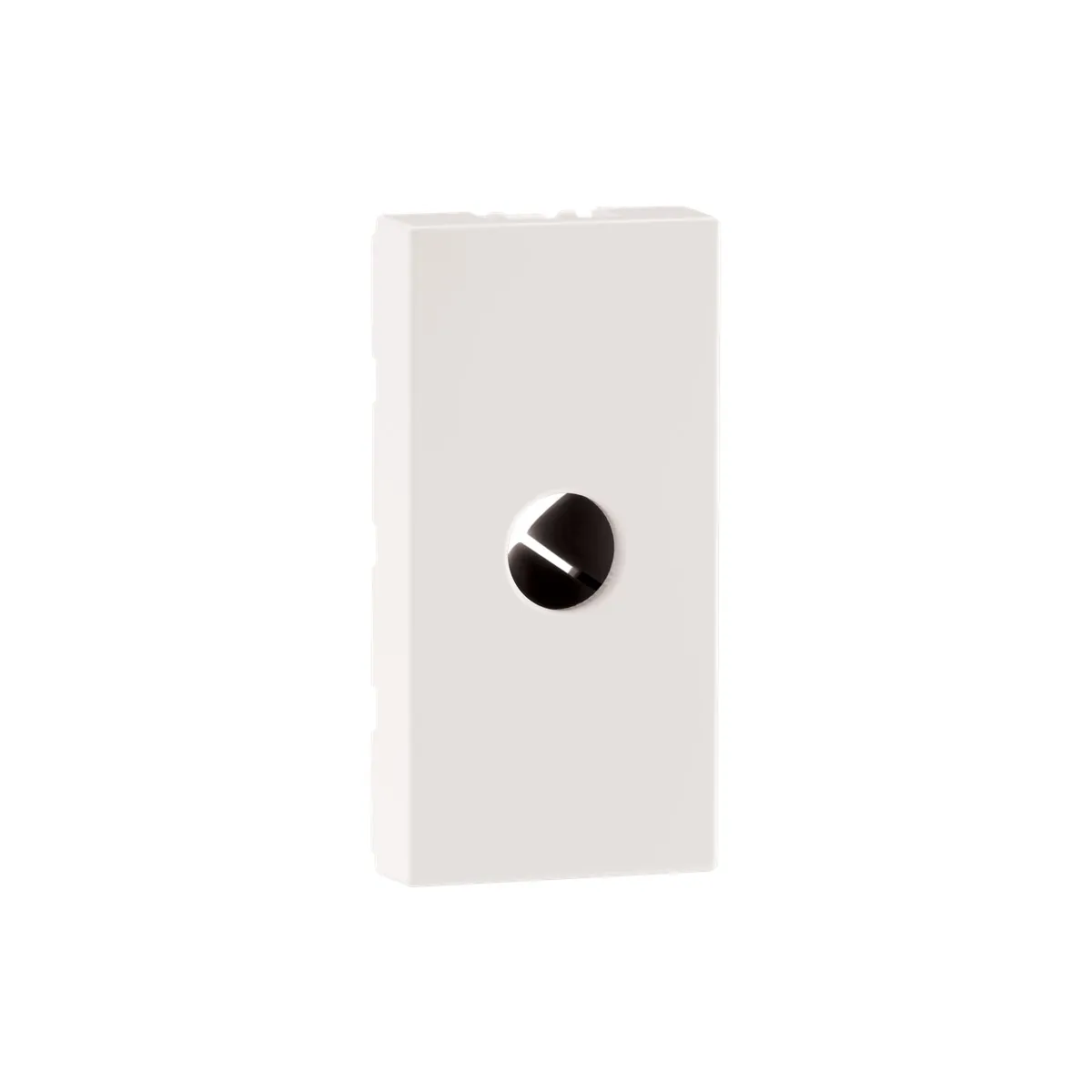
| Legrand Myrius Cable Outlet - 8mm - 1 Module, Cat. No.: 6792 75 | Rs 235.05 / Unit | MRP Rs 358 | RFQ Rs 232.85 | Stock: 25; Delivery: QWIK; Unit: Unit |
Don't substitute these
- Touch the faceplate of your geyser switch after it has been running for ten minutes; if it feels noticeably hot rather than barely warm, the terminals inside are loose or undersized.
- Never twist the copper wire strands with your fingers before inserting them into screw terminals; fold the bare stripped end over itself with pliers so the screw bites into double the contact area.
- Check the conduit entry point behind the geyser; steam from the bathroom often enters the electrical back box if the pipe gap is not sealed with silicone, corroding internal brass parts within a year.
How This Plays Out on Madoverbuildings (MOB)
A site contractor renovating a flat in Indiranagar found the existing bathroom piped with standard 2.5 sq mm wiring, ruling out the owner's request for 4.5kW instant heaters. He pulled up Madoverbuildings (MOB) to check live project pricing on 4 sq mm FR copper wire coils and modular cable outlets, confirmed the local fulfillment slot, and re-pulled the dedicated lines before the bathroom wall tiling was sealed.
Relevant Products to Compare

Frequently Asked Questions
Can I run a 4.5kW instant geyser on a 16A socket in Bengaluru?
No, you should never run a 4.5kW geyser on a standard 16A socket. A 4.5kW unit draws nearly 20 amps at normal domestic voltage, which exceeds the socket's safe contact capacity and will cause the plug pins to overheat, melt, or burn the faceplate. You need a dedicated 20A or 25A rated outlet or double-pole connection.
What size wire is required for a 3kW instant geyser?
A 3kW instant geyser requires a dedicated 2.5 sq mm multi-strand copper wire. It draws approximately 13 amps, which operates safely within the carrying capacity of 2.5 sq mm copper when protected by a 16A C-curve MCB.
What MCB rating do I need for a 4.5kW water heater?
You need a 20A or 25A C-curve miniature circuit breaker for a 4.5kW heater. Never install this breaker unless the underlying copper wire has also been upgraded to 4 sq mm, or the concealed wiring will overheat before the breaker trips.
Why does my instant geyser water stay lukewarm during Bengaluru winters?
Instant geysers have compact 3-litre chambers that heat water on the fly, meaning cold winter inlet water (16°C to 18°C) requires a low flow rate to absorb sufficient heat. If you open your tap or shower mixer fully, the water passes over the heating coil too fast to heat up properly; throttle the inlet valve to reduce flow and increase water temperature.