Categories

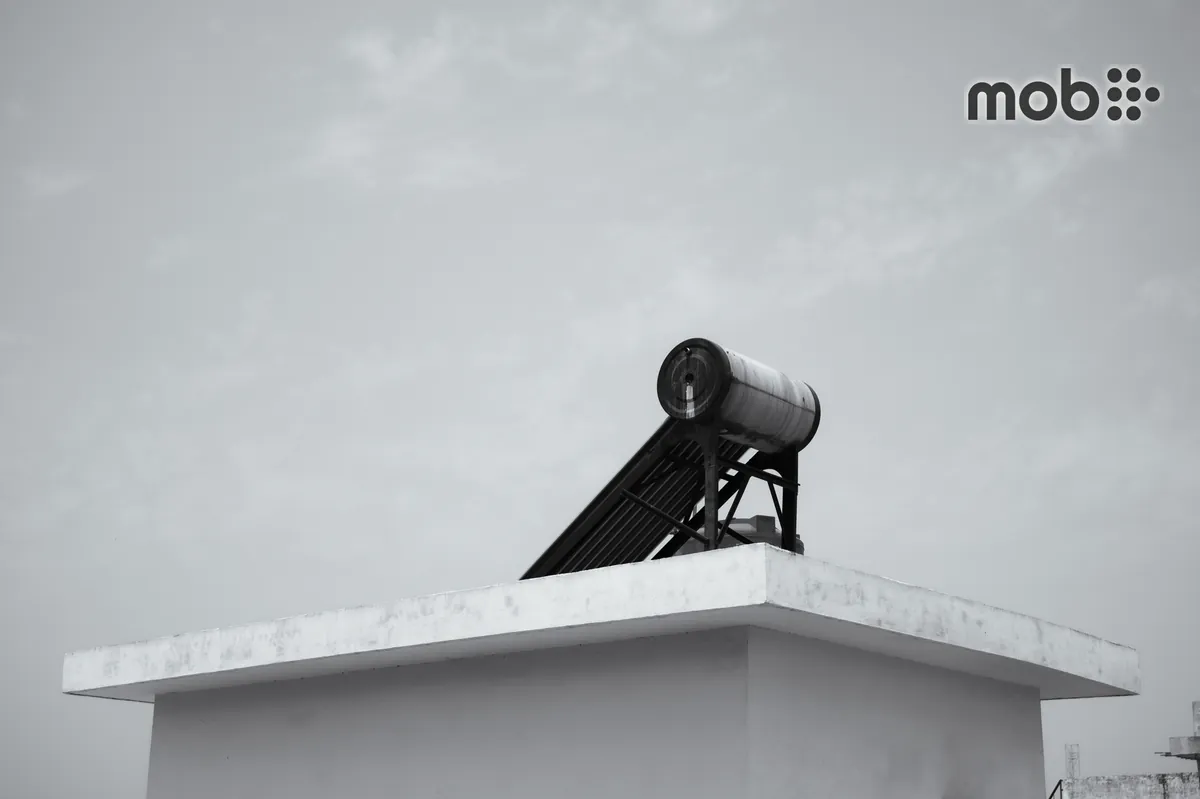
If you are building an independent house or villa in Bengaluru with three or more bathrooms, install an air-source heat pump instead of a solar water heater. Do not let the contractor convince you that free sunlight makes solar the default choice. After three consecutive misty, overcast mornings in December, every solar tank in the city turns into an oversized, poorly insulated outdoor container running on a back-up electric coil that burns power at standard one-to-one efficiency.
A solar water heater relies on direct radiation that disappears the moment the winter fog sets in or the July monsoon stalls over the city. A heat pump does not care about sunshine; it pulls ambient heat out of the surrounding 16-degree air and transfers it into your water with a coefficient of performance around three to one. You spend roughly one-third of the electricity to get the same hot water temperature.
The initial equipment bill for a heat pump is higher, but the difference on site comes down to three things solar dealers rarely mention: hydro-pneumatic pressure limits, borewell scaling in evacuated glass tubes, and the square footage of roof space you surrender.
What happens after seventy-two hours of cloud cover
A typical 200-litre or 300-litre evacuated tube collector (ETC) solar system depends on direct solar radiation hitting the glass tubes to heat the water inside. On a clear March afternoon in Bengaluru, water inside that manifold can easily touch 65 to 70 degrees Celsius. In December and January, when the morning temperature drops to 14 degrees and the sky stays grey until noon, heat absorption drops near zero.
When the sun does not show up for three days, you are forced to switch on the internal electric heating element inside the solar tank. That element is usually a standard 2 kW or 3 kW immersion coil. Because the storage tank sits out in the open wind on your terrace, exposed to cold night breezes, its standing heat loss is brutal. You end up paying full electricity rates to heat 300 litres of water from an uninsulated ambient temperature of 17 degrees, even if your family only uses 120 litres that morning.
An air-source heat pump operates on a refrigeration cycle running in reverse. It uses a fan to pull ambient air over an evaporator coil containing R410A or R134a refrigerant. Even when the air feels chilly to your skin at 15 degrees Celsius, there is plenty of sensible heat for the refrigerant to boil, compress, and dump into the water through a heat exchanger. While your solar system on day three is running at an effective COP of 1.0 (one unit of electricity makes one unit of heat), the heat pump delivers three units of heat for that same unit of electricity.
Borewell water and the scale buildup inside your manifold
If your site in Sarjapur, Whitefield, or North Bengaluru runs on borewell water with total dissolved solids exceeding 600 ppm, solar water heaters suffer rapid scale deposition. The mechanism is simple and unforgiving. In an ETC system, water sits directly inside the glass vacuum tubes. As that water heats up, calcium and magnesium carbonates precipitate out and stick to the inner glass walls.
Within eighteen months, a hard white crust coats the lower half of each tube. Glass is an insulator; calcium scale is an even better insulator. Solar radiation can no longer transfer heat efficiently into the water column. The homeowner notices the water is merely lukewarm by October, assumes the weather is bad, and leaves the electric backup switch on permanently.
Cleaning an ETC system means draining the tank, pulling out twenty to thirty brittle glass tubes individually, acid-washing them, and replacing worn silicone grommets without cracking the glassware. Most plumbing contractors refuse the job or break three tubes in the process. In contrast, quality heat pumps use an external plate heat exchanger or an inner coil submerged in treated water, making descaling straightforward through a chemical circulation flush without dismantling the physical unit.
The pressure pump mismatch that cracks solar tanks
Almost every modern villa in Bengaluru uses a hydro-pneumatic booster pump to maintain 2.5 to 3.5 bar pressure at shower heads and concealed diverters. This is where standard solar systems become a plumbing hazard.
Most budget solar heaters sold across Karnataka are non-pressurized gravity systems. They are designed for a working pressure of zero; water flows out by gravity alone. If you connect a hydro-pneumatic pressure pump downstream of a gravity solar tank, the pump sucks the tank flat or back-pressures cold water into the solar manifold. If you install a pressurized solar water heater, you pay a heavy premium for an inner tank built from 2.5 mm or 3.0 mm steel, yet the majority are only rated for 3 to 4 bar test pressure. One faulty pressure-reducing valve or an expansion spike on a hot afternoon, and the inner tank seam splits.
Air-source heat pump storage cylinders are engineered from the ground up as pressure vessels. Most decent commercial and domestic units carry an operating rating of 6 to 8 bar. They sit comfortably in line with your variable-frequency drive (VFD) pressure pump, handle sudden valve shutoffs without tank fatigue, and feature reliable multi-function safety valves that release excess thermal pressure safely.
The terrace footprint and solar panel conflict
Look at the terrace of a newly completed 40x60 plot villa. Between the stair cabin, the lift machine room, the overhead tank structure, and the parapets, shadow-free space is limited. A 300 LPD solar water heater with its support stand and collector array eats up roughly 45 to 60 square feet of prime terrace floor.
More importantly, it creates a massive shadow zone. You cannot install rooftop solar photovoltaic (PV) panels anywhere north of that solar water heater without losing solar generation across six months of the year. If you want a usable terrace garden or a sit-out, that metallic frame with tilted black tubes ruins the entire floor layout.
A split heat pump system separates the storage tank from the outdoor fan unit. The insulated vertical tank sits quietly inside the plumbing shaft room or a utility corner, taking up less than 6 square feet of floor space. The outdoor fan unit mounts on brackets on an external parapet or dead wall, exactly like an air conditioner compressor. That leaves your entire roof open for grid-tied solar PV panels, which are far more flexible because they generate electricity for your lights, fans, EV charger, and the heat pump itself.
The plumbing drop and the wrong pipe substitution
Central hot water heating has one major site penalty regardless of whether you pick solar or heat pumps: distribution heat loss. In a two-storey house, running a single hot water line from the terrace down to a ground-floor powder room means twenty metres of pipe filled with static cold water. The user turns on the tap and dumps twelve litres of water down the drain waiting for the heat to arrive.
To solve this, MEP drawings specify a hot water recirculation loop with a dedicated bronze pump. This is where site supervisors make a destructive material substitution. They run plain SDR 11 CPVC pipe inside the plumbing shaft without external insulation, or worse, they wrap the pipe with cheap 6 mm polyethylene foam and cover it with normal packing tape.
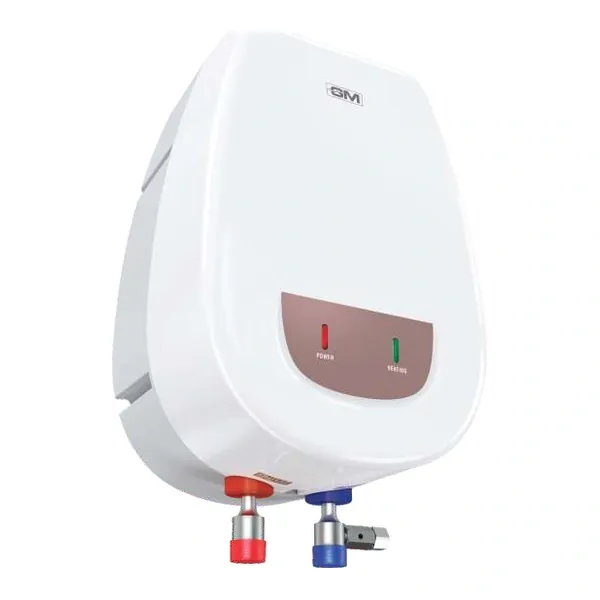
Within one summer, thin foam degrades, leaving bare CPVC pipes exposed to shaft drafts. Your heat pump or solar tank then spends half its energy heating the vertical masonry shaft instead of the bathroom. Every hot water distribution line from a central terrace system must be jacketed with minimum 13 mm or 19 mm closed-cell elastomeric nitrile rubber tubing, with all seams sealed using rubber solvent adhesive before the shaft is closed. If your design has long runs, placing a small secondary storage geyser or an instant heater like the GM Modular CAPEO Instant Water Heater 3 L near isolated washbasins is far more efficient than pulling an uninsulated twenty-metre pipe run from the roof.
Solar Water Heater (ETC) vs Air-Source Heat Pump
| Parameter | Solar Water Heater (ETC) | Air-Source Heat Pump | What Fails on Site |
|---|---|---|---|
| Cloudy Day Performance | Drops completely; relies entirely on 1:1 electric backup coil | Maintains 3:1 heat output from 15°C ambient air | Solar coil runs continuously, driving power consumption high |
| Working Pressure Rating | 0 bar (gravity) to 4 bar (pressurized model) | 6 to 8 bar standard rating | Booster pumps crack thin inner seams on pressurized solar tanks |
| Hard Water Handling | Scale coats glass tubes; heat transfer drops steadily | Scale confined to cleanable plate exchanger or coil | ETC tubes crack during descaling or require full replacement |
| Roof Space Needed | 45 to 60 sq ft of shadow-free terrace | 6 to 8 sq ft footprint; compressor mounts on wall | Solar frame casts shadows on rooftop solar PV installations |
| System Lifespan | 7 to 10 years before manifold rust and seal failure | 10 to 12 years with basic compressor maintenance | Silicone grommets perish under harsh outdoor UV exposure |
Which one to buy
- Check your water pressure setup: if your plumbing design uses a booster pump operating above 2.5 bar, eliminate gravity solar heaters immediately and verify the pressure vessel rating of any alternative.
- Test your water source: if borewell water TDS exceeds 500 ppm and you do not plan to install a central water softener, avoid evacuated glass tube solar collectors.
- Calculate your roof layout: measure usable terrace space and confirm if you want a grid-tied solar PV array. If rooftop PV is planned, use a compact heat pump to leave roof space clear for electric panels.
- Insulate every supply and return line: specify closed-cell nitrile rubber insulation with minimum 13 mm wall thickness for all hot water runs inside plumbing shafts.
Compare current options and place orders onMadoverbuildings (MOB).
Pricing Snapshot
| Product | Live Price | MRP / RFQ | Buying Note |
|---|---|---|---|
| GM Modular CAPEO Instant Water Heater 3 L, 3000 W, Rose Gold | Rs 2,649.92 / Unit | MRP Rs 4,249 | RFQ Rs 2,484.30 | Stock: 15; Delivery: QWIK; Unit: Unit |
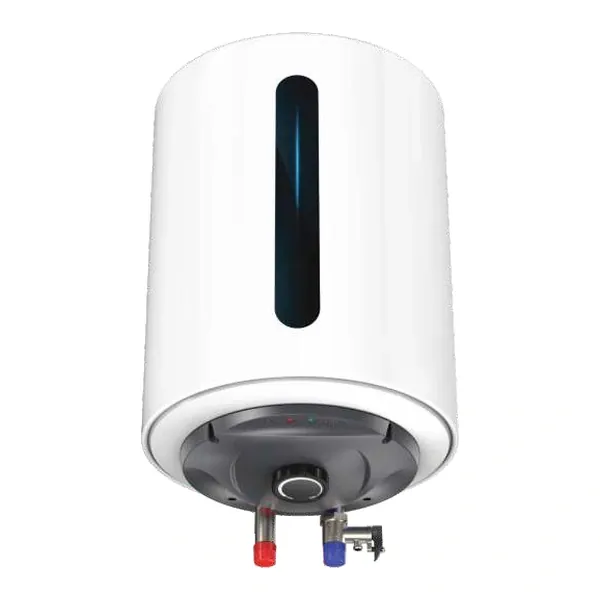
| GM Modular ORO Vertical Storage Water Heater 35 L, 2000 W, White | Rs 10,877.44 / Unit | MRP Rs 22,990 | RFQ Rs 10,197.60 | Stock: 15; Delivery: QWIK; Unit: Unit |
Don't substitute these
- Never run bare CPVC through an external shaft; uninsulated pipes lose 4 to 8 degrees Celsius between the terrace and ground-floor taps.
- If choosing a heat pump, do not mount the outdoor fan unit on the parapet wall directly outside a master bedroom; compressor vibrations travel straight through 150 mm blockwork.
- For guest bathrooms used once a week, skip the central hot water line altogether and install a dedicated 35-litre storage geyser like the GM Modular ORO to avoid line losses.
- Make sure your heat pump installation includes an inline Y-strainer on the cold water inlet to stop pipe debris from fouling the heat exchanger plates.
How This Plays Out on Madoverbuildings (MOB)
A mechanical contractor roughing in hot water lines for a villa project in Hennur needed pressure-rated valves and storage geysers for isolated guest annexes after switching the main terrace spec from solar to a heat pump. Instead of chasing distributors across town for fragmented plumbing items, he reviewed technical specifications and raised an RFQ on Madoverbuildings (MOB) to get exact delivery confirmations against his site milestones.
Relevant Products to Compare

Frequently Asked Questions
Can a heat pump water heater work efficiently during cold Bengaluru mornings?
Yes. Air-source heat pumps extract heat from ambient air down to 5 degrees Celsius, while Bengaluru winter mornings rarely drop below 13 degrees. The system maintains an energy efficiency ratio between 2.5 and 3.5 even in dense fog.
Does a solar water heater work on cloudy or rainy days?
It provides negligible heating on overcast days because it depends directly on infrared and visible solar radiation. Water in the storage tank drops to ambient temperature unless an auxiliary electric heating element is switched on.
How much electricity does a heat pump save compared to a regular geyser?
A heat pump consumes roughly 65 to 70 percent less electricity than a conventional storage geyser for the same volume of hot water. Instead of generating heat with an electric resistance element, it uses power purely to run a compressor that moves ambient atmospheric heat.
Can I connect a booster pressure pump directly to a solar water heater?
Only if you purchase a dedicated pressurized solar water heater rated for 4 bar or higher. Standard gravity-fed solar tanks have thin walls that will rupture or leak through air vents if subjected to pressure pump force.
Which is easier to maintain with hard borewell water in Bengaluru?
Heat pumps are easier to maintain because descaling is restricted to a compact heat exchanger loop. Solar evacuated tubes accumulate thick lime deposits internally that reduce heat transfer and often break during manual descaling.
Is it better to install rooftop solar PV panels with a heat pump instead of a solar water heater?
Yes, pairing rooftop solar PV with a heat pump is far more practical for modern homes. Solar PV panels take up roof space more efficiently and generate electrical power that runs your lights, appliances, and the heat pump, avoiding redundant water-heating frames on the terrace.
Can I substitute one solar option for the other on site?
Only if the drawing, pressure, and finish still match. A cheaper solar substitute often fails at joints, water lines, or wet rooms. Ask the contractor which option the spec actually named.