Categories

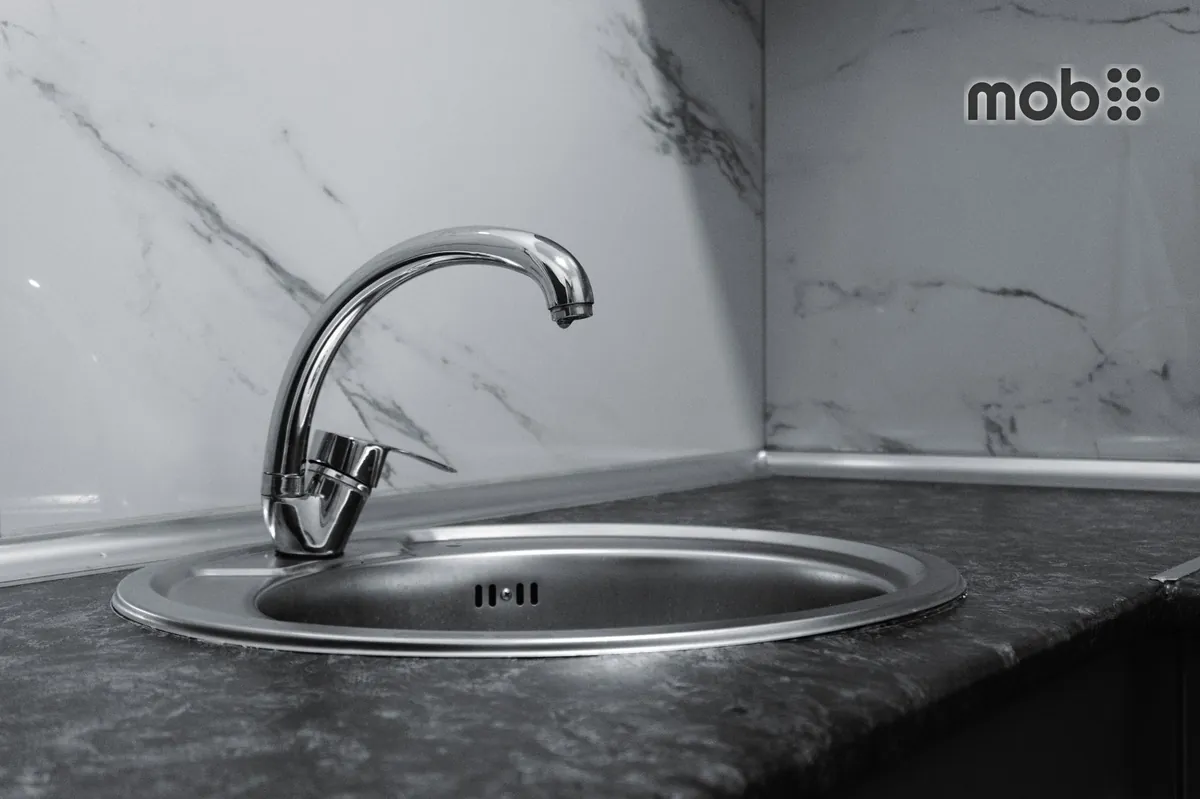
If your Bengaluru home runs on tanker supply or deep borewell water, buy a satin-finish SS 304 sink in 1.2mm thickness. Skip the black quartz composite entirely. The black granite sink is the single most regretted kitchen fixture across Bellandur, Whitefield, and Sarjapur, because mineral-heavy water turns the jet-black bowl into a chalky, cloudy grey within six months of moving in.
Showrooms light black quartz sinks under warm spotlights with treated tap water running through them. On site, your kitchen tap discharges water with Total Dissolved Solids running anywhere between 600 ppm and 1400 ppm. Those dissolved calcium and magnesium carbonates do not simply sit on the surface like dust. They bake into the textured composite binder every time a hot pan drips or wet plates air-dry on the rim.
Stainless steel 304 is not immune to water scaling, but its non-porous passive chromium oxide layer allows you to wipe those salts away without chewing through the material. A composite sink holds onto those white rings like a dry sponge holds salt, turning what was supposed to be a luxury architectural detail into a permanent maintenance headache.
What Bengaluru borewell water actually does to black quartz
A quartz composite sink is not a carved block of natural stone. It is made from roughly 80 percent crushed quartz granite bound together with 20 percent acrylic resin pigments. That resin gives the sink its matte, velvety feel, but it also creates microscopic surface texture. In cities with soft river water, this material performs reasonably well. In Bengaluru, where borewell aquifers cut through mineral-rich peninsular gneiss, the water carries extreme carbonate hardness.
When water droplets evaporate on the sink walls, calcium carbonate precipitates out as solid calcite. On a light-coloured or brushed metallic surface, these crystals form a thin film you can buff off. On a pitch-black quartz surface, each microscopic mineral crystal embeds itself into the textured resin pores.
Homeowners inevitably try to fix the dullness with harsh measures. The maid uses a green abrasive scouring pad, or someone sprays a bathroom descaling acid. That is where the real disaster happens. Strong acids and aggressive abrasives do not just remove the calcium; they chemically degrade or strip the thin acrylic binder at the surface. Once that resin barrier is etched, the exposed quartz underneath turns permanently whitish and porous. You can smear mineral oil or coconut oil over the basin to hide the milky patches for two days, but the moment warm dishwashing detergent hits the surface, the oil washes away and the white chalk returns.
Where each material fails on site
Every sink material has an operating limit. Knowing these limits before cutting your 20mm granite or quartz slab saves costly countertop replacements later.
- Heat shock on composite: True granite withstands hot pans, but the acrylic binder in a quartz sink softens around 180 degrees Celsius. Dumping boiling starch water from a pressure cooker straight onto a cold composite basin can cause sudden thermal shock cracking, especially around the waste coupling.
- Scratches and dents on stainless steel: SS 304 will scratch from day one. Steel scourers, heavy kadhais, and stray cutlery will leave micro-swirls on the basin floor. The difference is that scratching stainless steel is purely cosmetic; it does not degrade the structural integrity or cause porosity. Thin sheets below 1mm can also dent or 'oil-can' (make a popping metallic noise) when filled with water or pressed hard.
- Edge chipping on flush-mount installations: Quartz sinks installed flush with the countertop have exposed composite rims. Dropping a heavy 5-litre Hawkins pressure cooker directly against that sharp composite lip will chip the corner clean off. Repairing that chip requires pigmented epoxy paste, which never quite matches the original factory finish.
- Undermount joint failure: Because composite sinks weigh significantly more than pressed steel units, relying purely on silicone sealant beneath an undermount cutout is asking for trouble. When full of water and soaked cookware, an unsupported quartz sink will shear the silicone bead and drop into the cabinet carcass, soaking your marine ply sink unit.
The substitution that looks identical and rusts
If you decide on stainless steel, the biggest site trap in Indian retail is buying an SS 202 or 'commercial stainless' sink that masquerades as genuine SS 304. At the hardware shop, both look polished, bright, and clean. You cannot tell them apart by eye, and an ordinary fridge magnet is not always conclusive because cold-pressing can introduce slight magnetic pull even to legitimate austenitic steel.
SS 202 substitutes expensive nickel with manganese and nitrogen. It cuts manufacturing costs dramatically, but manganese has poor resistance to chlorides and hard water salts. In a kitchen receiving borewell water, an SS 202 sink will show pinhead-sized red rust spots around the bottom perimeter seams and the drain outlet within four to eight weeks. Once rust pitting begins in 202 grade, it pits straight through the metal thickness.
Genuine SS 304 contains a minimum of 18 percent chromium and 8 percent nickel (often stamped as 18/8). It forms a self-healing chromium oxide film that completely repels rust from domestic tap water. Demand sinks that carry an indelible laser etching or deep mechanical stamping of 'AISI 304' or 'SS 304' right on the rim. If the dealer quote says 'premium stainless steel' without specifying grade 304, reject the batch.
Reading the sheet gauge and sink specifications
Never buy a sink by its length and breadth alone. The cross-sectional thickness decides whether your kitchen sounds like a tin shed every time the tap runs.
- Sheet thickness: Budget stainless sinks are drawn from 0.8mm or even 0.6mm sheets (22 to 24 gauge). These are flimsy, vibrate heavily against the faucet, and distort under the weight of an RO system or heavy brass mixer. Insist on 1.0mm (19 gauge) at the bare minimum, with 1.2mm (18 gauge) or 1.5mm (16 gauge) being the standard for fabricated handmade sinks.
- Sound deadening pads: A quality steel sink comes with thick rubber dampening pads glued to the outer bottom and sidewalls, finished with a heavy stone-guard anti-condensation undercoating. If you tap the underside with your knuckles and it sounds like a hollow drum, reject it.
- Bowl depth: Anything shallower than 8 inches will splash water all over your countertop when washing large thalis or deep pots. An 8-inch to 10-inch bowl depth is essential, but make sure your bottle trap clearance inside the under-sink carcass accounts for the extra depth.
- Drain position: Center-back or corner-rear drains are vastly superior to center-placed drains. A rear drain keeps the waste pipe tucked neatly against the rear wall inside the modular base unit, leaving the front cabinet space clear for an under-sink RO plant, pull-out dustbin, or detergent rack.
When does a quartz composite sink actually make sense?
A black or dark grey quartz composite sink is not inherently flawed; it is simply incompatible with raw hard water. If your building has a fully functional, properly regenerated central ion-exchange water softener that keeps bathroom and kitchen tap water below 150 ppm TDS, quartz sinks perform admirably. The matte stone texture absorbs ambient sound naturally, so running water produces almost zero clatter without needing rubber sound pads.
If you have soft municipal supply (like regular Cauvery water connections in central parts of the city) or an independent whole-house softener system, composite sinks provide a distinct aesthetic advantage that seamless modular kitchens often call for. But if your domestic line runs on private tankers, deep borewells, or untreated township supply, you must pick your battles. Choosing black quartz under hard water means spending every weekend scrubbing deposits with specialized non-acidic cleaners or living with permanent white rings.
Kitchen Sink Comparison for Hard Water Sites
| Feature / Metric | SS 304 (1.2mm Fabricated) | Quartz Composite (80/20 Acrylic) | SS 202 (The Risky Alternative) |
|---|---|---|---|
| Bengaluru Hard Water Reaction | Scale wipes off; no chemical etching | Severe white chalking in resin pores | Rapid pitting and rust spots at seams |
| Heat Tolerance | Withstands boiling pans and direct hot oil | Binder softens around 180°C; thermal shock risk | High heat resistance, but discolours easily |
| Noise and Vibration | Quiet if 1.2mm with bottom acoustic pads | Naturally quiet; thick stone-like walls | Noisy drum effect due to 0.6-0.8mm thin sheets |
| Mechanical Shock Resistance | Dents under severe impact; will not crack | Can chip or crack if heavy cast iron drops | Dents very easily; bends under faucet torque |
| Cost to Maintain Long-term | Zero maintenance; clean with standard dish soap | High; requires softening agents or mineral oiling | Fails early; requires complete basin replacement |
Which one to buy
- Test your site water supply TDS using a simple handheld digital meter before finalising kitchen finishes.
- If TDS exceeds 300 ppm without a softening plant, strike black or dark grey quartz composite off your procurement sheet.
- Select an SS 304 sink with a minimum sheet thickness of 1.2mm (18 gauge) featuring a brushed satin finish rather than a mirror polish.
- Check the underside of the steel bowl to verify factory-installed acoustic rubber dampening pads and anti-sweat coating.
- Instruct your kitchen fabricator to mount undermount sinks using mechanical stone support brackets or under-carcass timber cleats, never relying on adhesive sealant alone.
Compare current options and place orders onMadoverbuildings (MOB).
Don't substitute these
- Never pour raw muriatic or tile-cleaning acid into an SS 304 sink to clear a drain clog; the hydrochloric fumes will pit the protective chrome layer overnight.
- If you already have a black quartz sink showing white salt marks, wipe it thoroughly dry and apply food-grade mineral oil with a microfiber cloth to disguise the chalking.
- A satin or brushed hairline finish hides water spots and cutlery scrapes ten times better than a mirror-finish steel sink.
- Check the sink drain hole size before buying plumbing trim: fabricated handmade sinks almost always require a 3.5-inch (90mm) basket waste strainer.
How This Plays Out on Madoverbuildings (MOB)
A residential interiors contractor handling a four-apartment project off Varthur Road needed to replace warped, paper-thin builder-grade sinks before handover. He pulled up Madoverbuildings (MOB) on his phone at the site, checked the certified SS 304 1.2mm sink specifications with rear drain placements, confirmed his tax invoice details, and raised the procurement schedule right from the car.
Frequently Asked Questions
Can you use vinegar to clean hard water stains from a quartz composite sink?
Use diluted vinegar with caution and rinse it off immediately with fresh water. While mild acetic acid dissolves light calcium deposits, letting it sit on composite quartz softens the acrylic polymer binder over time, causing irreversible surface hazing.
What is the best sink gauge for an SS 304 kitchen sink?
The ideal thickness for an SS 304 domestic kitchen sink is 1.2mm (18 gauge). Sinks pressed from 1.0mm sheets are acceptable for small utility areas, but anything thinner than 1.0mm will vibrate under running water and flex under the weight of tall sink mixers.
Does black granite composite sink color fade under hard water?
The black pigment inside the composite material does not actually fade, but it appears bleached because calcium and magnesium salts penetrate microscopic surface crevices. The resulting whitish scale layer obscures the dark pigment, making the basin look dull and discoloured.
Is an undermount sink safe for quartz composite kitchen counters?
Undermount installations work safely with quartz counters provided the sink is supported by mechanical steel brackets or an engineered timber cradle beneath the countertop. Relying only on silicone caulk or epoxy adhesive against the stone rim leads to bond failure once the sink is loaded with water and heavy cookware.
Which sink finish is easiest to maintain with borewell water in Bengaluru?
A brushed satin or micro-linen stainless steel finish is the simplest to maintain in hard water conditions. It does not show drying mineral spots as vividly as mirror-finish steel, and it can be scrubbed clean with mild detergent without stripping protective coatings.