Categories

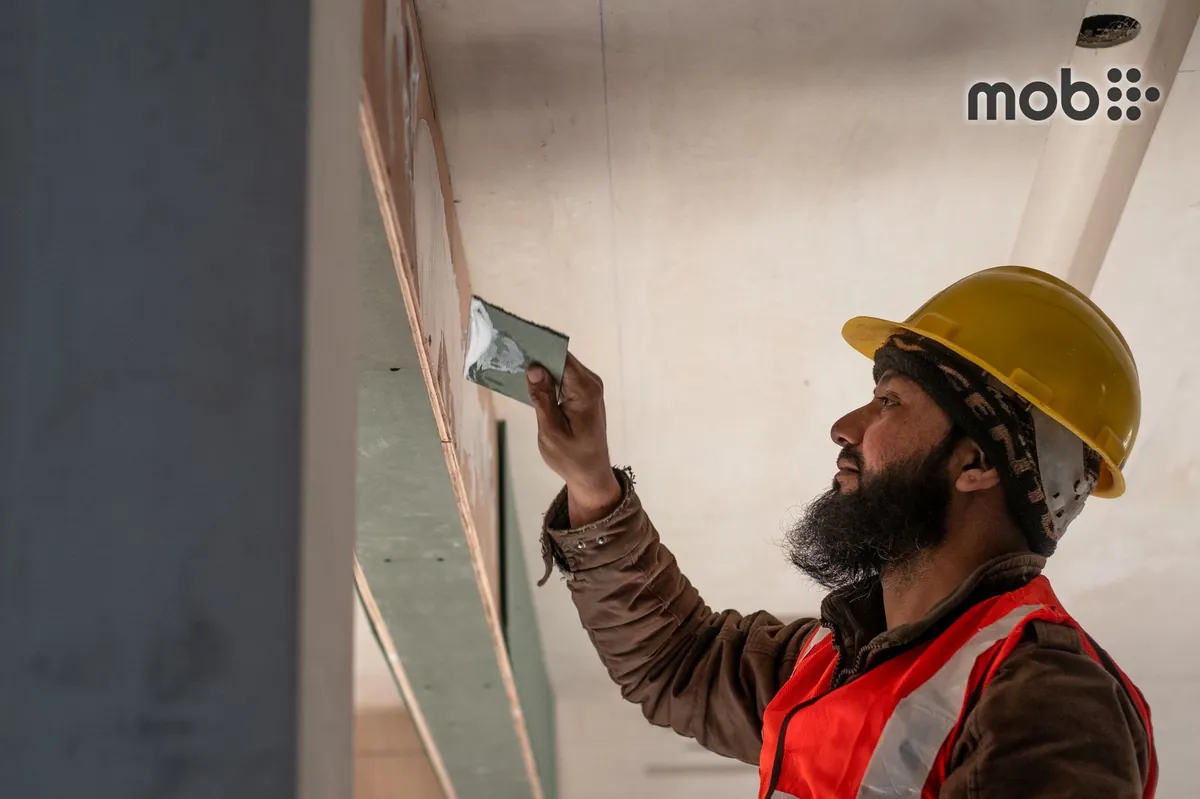
For a standard sealed living room or bedroom in Mumbai with regular air conditioning, 12.5 mm moisture-resistant (MR) gypsum board is the clear winner because it takes a smooth, seamless paint finish without hair-line joint cracks. But if you are building in a flat along Marine Drive, Bandra, or Versova where the sea breeze blows salt and 85 percent humidity through open balconies, standard gypsum board will belly down within two monsoons. In semi-open corridors, kitchens, toilets, and non-air-conditioned sea-facing flats, calcium silicate board wins outright.
Walk into any three-year-old apartment renovation near the sea and run a straight edge across the ceiling. Nine out of ten times, you will see a gentle belly between the secondary channels. The contractor usually blames bad paint or cheap putty. Paint has nothing to do with it. The board has yielded under its own dead weight because moisture broke down the core.
Choosing between these two boards is not a matter of brand loyalty or cosmetic taste. It comes down to ambient moisture, suspended dead weight, and how your site crew handles jointing.
Why coastal humidity turns gypsum into a hammock
Gypsum is calcium sulphate dihydrate encased in recycled paper liners. In a dry climate like Jaipur or Delhi in winter, a standard 12.5 mm plasterboard stays rigid for decades. In coastal Mumbai, from June through October, relative humidity rarely drops below 80 percent, often climbing past 90 percent during torrential weeks.
Paper is hygroscopic. It drinks water directly from the air. When the top face of the board (the unpainted side facing the dark, unventilated ceiling plenum) absorbs moisture, the paper softens and stretches under tension. At the same time, the gypsum core softens microscopically as moisture weakens the crystalline bond of the hemihydrate matrix. The board slowly slips down in the center of the bay, pulling away from screw heads or dimpling around them.
Once a gypsum board develops a 5 mm sag, gravity takes over. No amount of skim-coating or repainting will flatten it out again. Trowelling two extra coats of putty over a sunken belly just adds five kilograms of damp weight to an already failing sheet, accelerating the sag until the joint paper tears along the channel line.
The calcium silicate difference: steam, salt, and rigid silica
Calcium silicate boards are made from a slurry of high-grade silica, quicklime, and reinforcing cellulose fibers, cured under high pressure and temperature in an autoclave. This hydrothermal reaction creates a mineral matrix called tobermorite. Unlike gypsum, tobermorite does not soften in water, does not rot, and does not feed fungal spores.
If you submerge a chunk of calcium silicate board in water for a week, lift it out, and let it dry, its structural integrity remains practically unchanged. It cannot delaminate because it has no paper skin. This makes it the standard choice for coastal soffits, balcony ceilings, lift lobbies, and kitchen utility drops where sea air and steam circulate freely.
There is a trade-off, however. Calcium silicate is significantly denser and more brittle than gypsum. Cutting it on site requires a carbide score-and-snap knife or a circular saw with dust extraction, throwing off fine silica dust that workers hate. It also behaves differently at the joints. While gypsum boards taper at the long edges to take jointing tape and compound seamlessly, calcium silicate boards have minimal edge flex, making flush seamless joints much harder to maintain without visible hairline cracks when the building structure moves.
Where each option fails on site
Every material has a breaking point where a contractor's shortcut guarantees a call-back within six months. Knowing these limits tells you exactly what to guard against during inspection.
- Standard gypsum board fails when exposed to continuous ambient relative humidity above 70 percent, or where back-plenum ventilation is zero. It also fails immediately if an overhead AC drain pipe or slab condensation drops water onto the unlined top surface.
- Calcium silicate board fails at the butt joints if the finisher treats it like standard drywall. Because calcium silicate expands and contracts slightly with thermal changes while staying dead-rigid, standard gypsum joint compounds crack right down the seam. It demands an elastomeric or polymer-modified jointing system with alkaliproof mesh.
- Both boards fail when installers stretch the framing layout. The standard residential shortcut in Mumbai is running ceiling sections at 600 mm centers to save on metal channels. In a humid zone, a 12.5 mm gypsum board framed at 600 mm is subject to availability to sag. The spacing between ceiling sections must never exceed 400 mm center-to-center.
- Screw pull-through is the hidden killer for both. In humid conditions, installers using standard drywall drill bits frequently over-drive the bugle-head screws, piercing the face paper of gypsum or crushing the brittle surface of calcium silicate. The screw holds only against friction, and within months, the board drops down off the screw shank.
What you must not substitute on the framing and accessories
The board is only half the ceiling system. The cold-rolled steel grid suspended from your slab bears the entire load, and this is where catastrophic failures begin in coastal districts.
Never allow your fabricator to substitute interior-grade 0.35 mm zinc-coated channels for proper 0.50 mm (or thicker) galvanized steel with an authentic Z120 zinc coating. In sea-facing apartments within two kilometers of the coastline, airborne chlorides settle into the unpainted ceiling plenum. Thin, poorly galvanized channels develop white rust within twelve months and red rust within twenty-four months. As the metal corrodes, screws lose their bite.
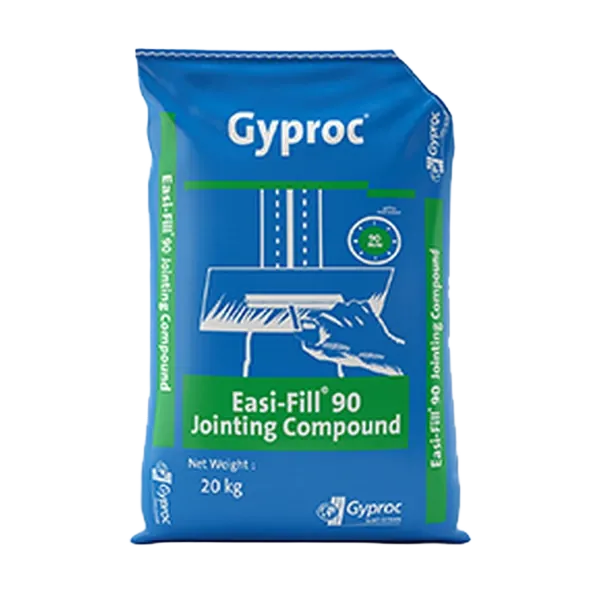
Do not permit local POP powder or chalk-based punning to be used as a joint filler over board seams. Using a genuine setting-type product like Gyproc Easi-Fill 90 Jointing Compound gives you controlled shrinkage, genuine bond strength, and a 90 to 120-minute working window designed to bed paper tape properly into recessed edges.
Finally, never substitute interior regular gypsum board (grey/ivory paper) into bathrooms or kitchen soffits under the promise that 'oil primer will seal it'. If the spec calls for gypsum in a wet or humid room, use green-faced Moisture Resistant (MR) board compliant with IS 2095 Part 1, or drop an exposed grid with pre-finished tiles like Gyproc Gyprex PVC laminated tiles that resist steam without needing paint.
How to verify the board and grid on delivery
Do not let the tempo driver dump the crates on site without checking three physical markings before unloading.
First, verify the board thickness with a simple vernier caliper. A batch stamped 12.5 mm should measure between 12.0 mm and 12.7 mm. Cheap non-standard boards frequently shave material down to 10.5 mm or 11 mm. That missing millimeter drops the board's flexural breaking load by more than 20 percent, making mid-span sagging inevitable in Mumbai weather.
Second, look at the edge print. Standard gypsum board carries clear brand markings and specifies compliance with IS 2095 (Part 1). Moisture-resistant gypsum sheets will have a green face liner and green core yarn or core additives. Calcium silicate boards should cite IS 14862 or equivalent autoclaved fiber-reinforced specifications.
Third, inspect the channel knurling. Quality ceiling sections feature deep knurling (cross-hatching) on the face. Knurling stops drywall screws from skidding during driving and helps prevent screw-strip out. If the channels look like mirror-smooth tin strips that you can bend easily with two fingers, reject the bundle at the gate.
Gypsum Board vs Calcium Silicate Board: Technical Comparison for Coastal Sites
| Option | Best for | Watch out | When to choose |
|---|---|---|---|
| Standard Gypsum Board (12.5 mm) | Air-conditioned bedrooms and living halls away from direct sea air | Absorbs air moisture quickly; sags if secondary channels exceed 400 mm | Choose when zero-crack seamless finish and easy cutting speed matter most in dry rooms. |
| Moisture-Resistant (MR) Gypsum Board | Kitchen dry zones, coastal living rooms with occasional cross-ventilation | Resists water vapor but will degrade under direct standing pipe leaks | Choose when you want smooth flat gypsum finishing in high-humidity coastal apartments. |
| Calcium Silicate Board (8 mm to 10 mm) | Balconies, open corridors, unventilated coastal plenums, and wet areas | Brittle to cut; hair-line cracks appear at joints if rigid compound is used | Choose when absolute zero-sag durability against salt spray and moisture is non-negotiable. |
| PVC Laminated Gypsum Ceiling Tiles (595x595 mm) | Office corridors, coastal utility rooms, and bathroom inspection ceilings | Exposed grid look; does not provide a continuous monolithic plastered finish | Choose when overhead plumbing access and zero maintenance against steam are required. |
Which one to buy
- Identify the micro-zone: if the ceiling is inside an air-conditioned room, stick with 12.5 mm gypsum; if it faces an open window to the sea, move to calcium silicate or MR board.
- Fix your secondary channel spacing at 400 mm center-to-center regardless of which board you pick; do not accept 600 mm spans in Mumbai.
- Order dedicated bugle-head drywall screws with an anti-corrosion coating, spaced at maximum 150 mm on board edges and 200 mm on intermediate channels.
- Use proper jointing compound such as Gyproc Easi-Fill 90 with perforated paper tape for gypsum, or flexible polymer matrix for calcium silicate seams.
- Prime both faces where possible: apply an alkali-resistant primer over calcium silicate before skim coating, and avoid trapping damp plaster behind unprimed sheets.
Compare current options and place orders onMadoverbuildings (MOB).
Pricing Snapshot
| Product | Live Price | MRP / RFQ | Buying Note |
|---|---|---|---|
| Gyproc Easi-Fill 90 Gypsum Board Jointing Compound 20 kg | Rs 588.50 / Unit | RFQ Rs 566.50 | Stock: 15; Delivery: QWIK; Unit: Unit |
| Gyproc Gyprex Granular 975 PVC Laminated Gypsum Ceiling Tiles 595 x 595 x 8 mm - Box of 10 | Rs 1,337.50 / Count | RFQ Rs 1,287.50 | Stock: 15; Delivery: QWIK; Unit: Count |
| Gyproc Gyprex Dewdrop 154 PVC Laminated Gypsum Ceiling Tiles 595 x 595 x 8 mm - Box of 10 | Rs 1,337.50 / Count | RFQ Rs 1,287.50 | Stock: 15; Delivery: QWIK; Unit: Count |
Don't substitute these
- Never let the gypsum board stacks sit flat on a damp concrete floor waiting for installation; elevate them on dry wooden battens at least 100 mm off the screed.
- Tap the board edge before fastening; if calcium silicate crumbles into chalky powder under thumb pressure, the autoclave curing was defective.
- If your site team refuses paper tape and insists on fiberglass mesh for tapered gypsum joints, prepare for hairline spider cracks within the first dry-season cycle.
- Always leave a 3 mm gap between board edges and perimeter brick walls to allow for structural expansion during weather swings.
How This Plays Out on Madoverbuildings (MOB)
A turnkey interior contractor handling a three-bedroom duplex on Carter Road, Bandra, discovered the living room false ceiling had begun visibly dipping between channel lines just before handover. Instead of chancing local market lots with unverified gauges, the site engineer opened Madoverbuildings (MOB) to order authentic Gyproc Easi-Fill 90 jointing compound and certified moisture-resistant board packs with clear technical specifications. Having confirmed delivery schedules straight to their Mumbai pin code, the team tightened the sub-framing to 400 mm centers and handed over a true, flat ceiling that survived the monsoon.
Relevant Products to Compare

Frequently Asked Questions
Why do false ceilings sag in Mumbai apartments?
Ceilings sag primarily because high ambient humidity softens the core and face paper of standard gypsum boards, causing them to belly under their own weight between framing members. The problem worsens when installers space secondary metal channels at 600 mm instead of the required 400 mm centers to cut metal costs.
Can I use standard gypsum board in coastal Mumbai bathrooms?
No, standard ivory-paper gypsum board will soften and fail in a coastal bathroom within months due to trapped steam and moisture. You must use either green-faced Moisture Resistant (MR) gypsum board, calcium silicate board, or pre-laminated PVC ceiling tiles on an exposed grid.
Is calcium silicate board better than gypsum board for fire and water?
Yes, calcium silicate board is non-combustible and completely immune to structural softening from water because its autoclaved tobermorite matrix contains no paper liners or moisture-soluble crystals. Gypsum board offers good fire rating, but its structural integrity degrades when saturated with moisture.
How do you prevent joint cracks in calcium silicate false ceilings?
Prevent cracks by using a flexible, polymer-modified jointing compound with an alkali-resistant mesh tape rather than standard gypsum joint plaster. Calcium silicate expands and contracts differently from gypsum, so rigid gypsum fillers will shear at the seams when temperatures fluctuate.