Categories

If you want zero maintenance headaches in a typical Mumbai high-rise apartment, choose a heavy-gauge 4-inch SS 304 round jali over an independent deep-seal P-trap. The concealed tile-insert linear drain looks stunning in architectural renders, but in everyday city use it turns into a high-maintenance sludge collector unless your contractor builds the correct fall and your building plumbing stack breathes properly.
Walk into any newly handed-over tower in Lower Parel or Kandivali after six months of occupancy. The complaint is rarely that the tiles cracked; it is that the shower area stays waterlogged for twenty minutes after a bath, or that an eggy sewer odour pushes up through the shower floor every time the flat three floors below flushes their master toilet. The drain top gets blamed, but the failure happens at the junction between the fixture and the trap.
A bathroom drain is not just a cosmetic metal trim. In a multi-storey tower, it is the barrier between your living space and thousands of litres of greywater rushing down a vertical soil-and-waste stack. When you swap a standard jali for a long linear channel without understanding trap volume, air displacement, and Mumbai municipal water residue, you buy yourself a recurring weekend cleaning chore.
The Mumbai stack problem: why high-rise floor traps misbehave
In an independent bungalow, wastewater leaves the bathroom trap and runs downhill into an external gully trap with minimal back-pressure. In a 30-storey Mumbai residential tower, your bathroom drain connects directly into a shared vertical single-stack or two-pipe drainage stack running inside an external plumbing duct. When someone on the 24th floor empties a 50-litre bathtub or runs a washing machine drain cycle, that water plunges down the vertical pipe at high velocity, pulling a curtain of air behind it.
This falling slug of water creates dramatic air pressure fluctuations inside the pipe. It creates negative siphonage behind it, trying to suck the water seal out of your trap, followed by positive back-pressure ahead of it, trying to blow sewer gas and foul foam out through your floor drain. To withstand this constant air piston effect, National Building Code standards mandate a minimum water seal depth of 50mm in every floor trap.
Here is where the problem starts. A standard 4-inch round cast-iron or heavy PVC P-trap sitting in a sunken slab easily holds that 50mm water seal. But many modern slim-profile tile-insert linear drains sold in local sanitary markets come with integrated miniature shallow-cup traps of only 20mm to 30mm seal depth, designed to fit into tight 50mm screed beds without core cutting. During a humid Mumbai afternoon, that shallow 25mm water pool evaporates within two days of an empty flat, or the air pulse from the main vertical stack siphons it dry in one second. Once that seal is broken, your luxury shower channel becomes an open exhaust chimney for the entire building drainage duct.
Where tile-insert linear drains fail on site
The linear drain fails primarily on three fronts: flow velocity, hair accumulation along the hidden channel, and incorrect screed bedding. A standard 4-inch round jali focuses all runoff into a tight point vortex. Water accelerates as it heads toward the centre, carrying suspended soap foam, shed hair, and skin flakes cleanly over the weir and into the waste line.
A 600mm or 900mm tile-insert channel spreads that identical volume of shower water over a wide, shallow stainless-steel tray. The water loses its velocity. Instead of rushing down a funnel, the water creeps slowly toward the central outlet hole. As the water film thins out, body oils, conditioner residue, and dissolved bath soaps cool down and plate out onto the stainless-steel floor of the trough beneath the removable tile insert.
Within three weeks, this creates a slimy biofilm layer. Hair snags on the raw cut edges of the insert tray, binding with the sticky soap scum to create an invisible felt mat. In Mumbai, where municipal supply alternates with hard tanker water in dry months, calcium carbonate deposits mix with this soap sludge, turning it into a stiff paste that cuts the drain channel clearance by half. Unless the homeowner lifts that heavy tiled tray with a plastic key every seven days to scrub underneath, the shower floor begins pooling water within two months of installation.
Where the classic 4-inch SS jali fails
The traditional 4-inch round stainless-steel jali is structurally reliable, but it has genuine operational weak points that frustrate site teams and homeowners alike. The main failure point is hair tangling across the grate openings and the requirement for complex four-way envelope tile cutting.
Because a 4-inch jali is a single point drain, the tiler must slope the floor from all four corners of the shower cubicle toward that single centre point. On modern large-format vitrified tiles (such as 1200x600mm or 800x1600mm), creating a four-way slope forces the tiler to make diagonal diagonal envelope cuts across the face of the tiles. If the site mason lacks a diamond-edge wet cutter, these diagonal cuts leave sharp, uneven edges that chip easily and collect dirt along grout lines.
The second failure occurs when contractors install a cheap lightweight jali without an integrated lock or inner strainer basket. Normal footsteps or vigorous bathroom wiper strokes dislodge loose, push-fit round jalis. Once the cover slips sideways, large debris, construction plaster chunks during handover, or dropped shampoo bottle caps fall straight into the 75mm or 100mm trap neck, lodging in the bottom curve of the P-trap where no drain snake can reach without opening the ceiling trap door of the flat below.
The material substitution that ruins high-rise bathrooms
The most dangerous substitution happening in coastal Mumbai hardware markets is passing off SS 202 grade floor drains as SS 304. To the eye, a brand-new polished SS 202 linear channel or jali looks identical to marine-grade SS 304. It shines just as brightly in the shop display under LED spot lights.
SS 202 contains only about 16 percent chromium and substitutes cheaper manganese for nickel. In Mumbai's humid, saline air, exposed daily to domestic cleaning acids, bleach, and chlorinated water, SS 202 develops microscopic pitting corrosion within six to nine months. What begins as faint brown speckling around the laser-cut drain slots quickly turns into flaky rust that bonds mechanically with hair clumps, accelerating blockages.
Always verify that the drain body, hair basket, and insert frame are stamped SS 304 or cast from solid brass with chrome plating. If you are renovating a sea-facing flat in Bandra, Worli, or Juhu, ask specifically for SS 316 for any concealed linear trough. The salt-laden air entering through the plumbing shaft louvers will eat through inferior sheet metal, causing unseen hairline pinholes in the drain trough that leak dirty shower runoff directly into your neighbour's false ceiling below.
The adhesive mistake inside the tile-insert tray
A subtle site mistake that ruins linear drains is how the strip of floor tile is fixed inside the removable steel insert tray. Masons often mix a thick dollop of standard grey site-mixed cement mortar or cheap tile adhesive to stick that narrow 50mm tile piece into the channel tray. This fails every single time.
Stainless steel has a completely different thermal expansion coefficient than ceramic or porcelain vitrified tile. When scalding hot shower water hits the tiled insert, followed seconds later by cold municipal rinse water, the steel tray and the vitrified tile expand and contract at different rates. Rigid, unmodified cement mortar cracks under this shear stress. Water slips beneath the tile strip, softens the wet cement bed, and turns it into foul, black slurry.
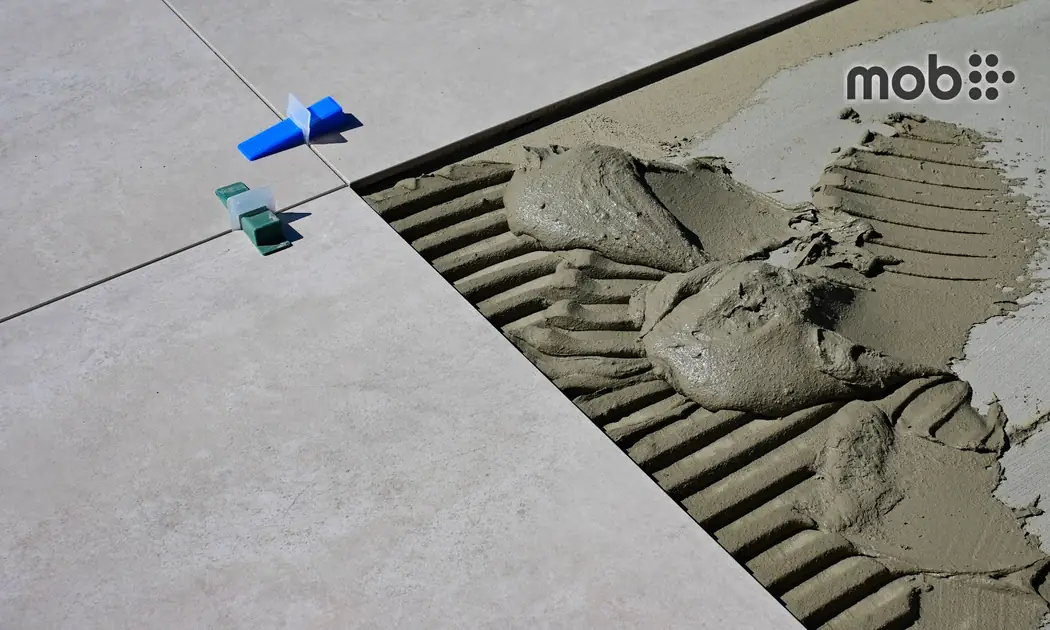
To bed a tile securely inside a steel tray, use a high-polymer modified thin-set adhesive such as Roff T06 Vitrofix Ultra, or an epoxy-based bonding system that maintains elastic grab against smooth metal. The adhesive layer must be combed evenly with a fine notched trowel so no hollow voids remain beneath the cut tile strip. Once set, seal the perimeter joints with epoxy grout rather than cementitious grout so greywater cannot penetrate behind the tile.
Tile-Insert Linear Drain vs 4-Inch SS 304 Round Jali
| Parameter | Tile-Insert Linear Drain | 4-Inch SS 304 Round Jali |
|---|---|---|
| Best Floor Layout | Single-directional slope with large-format vitrified tiles | Four-way envelope slope with smaller or mosaic tiles |
| Trap Depth Requirement | Requires 75mm to 100mm drop; shallow integrated traps risk siphonage | Fits standard 50mm deep-seal P-traps easily in sunken slabs |
| Flow & Drainage Velocity | Low flow velocity over wide trough; prone to soap scum settling | High vortex velocity; flushes hair and soap suds efficiently |
| Weekly Maintenance | High; requires lifting tiled tray weekly to clean biofilm and hair | Low; surface wiping or lifting simple hair catcher basket |
| Scent & Gas Seal | High risk if fitted with shallow 20mm dry trap cups | Low risk when plumbed to a true 50mm water-seal P-trap |
| Material Durability Risk | Large surface area; severe rust risk if supplied in SS 202 | Compact footprint; easily sourced in genuine heavy-gauge SS 304 |
Which one to buy
- Check your slab structure first: if you do not have a sunken slab or at least 90mm finished floor screed depth above the core cut, avoid linear channels with shallow built-in traps and stick to a standard jali connected to an external deep P-trap.
- If choosing a linear drain for an unbroken floor look, select a single-slope profile sloping away from the bathroom entrance directly toward the back shower wall.
- Inspect the metal grade stamp on the drain body before laying it into concrete; refuse any unit marked SS 202 or unbranded sheet metal, insisting on verified SS 304.
- Fix the tile inside the insert tray using a polymer-modified adhesive like Roff T06 Vitrofix Ultra instead of standard site-mix mortar to stop the tile strip from debonding under hot shower water.
- Clean the drain weekly using a non-acidic tile and ceramic cleaner like Roff T16 Cera Clean rather than raw muriatic acid, which instantly corrodes stainless-steel finishes.
Compare current options and place orders onMadoverbuildings (MOB).
Pricing Snapshot
| Product | Live Price | MRP / RFQ | Buying Note |
|---|---|---|---|
| Roff (T16) Cera Clean Professional Tile, Floor & Ceramic Cleaner, 1l | Rs 160 / Unit | MRP Rs 249 | RFQ Rs 155.42 | Stock: 14; Delivery: QWIK; Unit: Unit |
| Roff (T06) Vitrofix Ultra Adhesive, White, 20Kg Bag | Rs 935 / Unit | MRP Rs 1,560 | RFQ Rs 935 | Stock: 78; Delivery: QWIK; Unit: Unit |
Don't substitute these
- Never connect a washing machine drain line and a shower linear drain into the same shallow trap; the high-velocity discharge from the appliance pump will blow soapy suds right up through the shower floor.
- Tell your tiler to maintain a strict 1:60 to 1:50 fall (roughly 15mm to 20mm drop over one metre) inside the shower zone; the flat 1:100 slope that works for small balconies is too slow for soapy bath runoff.
- Always wrap the outer flange of your linear drain body with waterproofing fabric mesh and embed it into your liquid waterproofing coat before pouring the screed.
How This Plays Out on Madoverbuildings (MOB)
A site supervisor finishing a four-bathroom duplex in Worli needed forty kilograms of polymer adhesive to bed custom linear drain inserts before the client inspection. He checked the live stock of Roff T06 Vitrofix Ultra on Madoverbuildings (MOB), confirmed his site delivery window, and had the bags on his floor before the tile crew started mixing.
Relevant Products to Compare



Frequently Asked Questions
How deep should a bathroom floor trap water seal be in a Mumbai high-rise?
The water seal must be at least 50mm deep according to Indian Standard plumbing codes. Shallower water seals of 20mm to 30mm routinely dry out or get pulled out by the air siphonage created when lower floors discharge into the vertical drainage stack.
Which drain is easier to clean, a linear drain or a round SS jali?
A round SS jali is significantly easier to maintain because hair and debris gather right on the surface grate or in a small top strainer. A linear drain conceals an entire hidden trough underneath the tiled plate that catches soap scum and hair along its full length, requiring weekly lifting and scrubbing.
Can I use hydrochloric or muriatic acid to clean an SS floor trap jali?
Do not pour raw muriatic acid onto any stainless-steel drain cover or trap. Acid fumes strip the passive chromium oxide protective layer instantly, causing genuine SS 304 to develop permanent brown rust spots within hours; use a formulated tile and sanitary cleaner like Roff T16 instead.
What causes foul sewer smell to come out of a tile-insert linear drain?
Sewer smells usually occur because the drain relies on a shallow mechanical non-return flapper or an undersized water cup rather than a true P-trap. When bathroom exhaust fans run, they create negative room pressure that pulls sewer air straight through dried-out or unsealed drain cups.