Categories

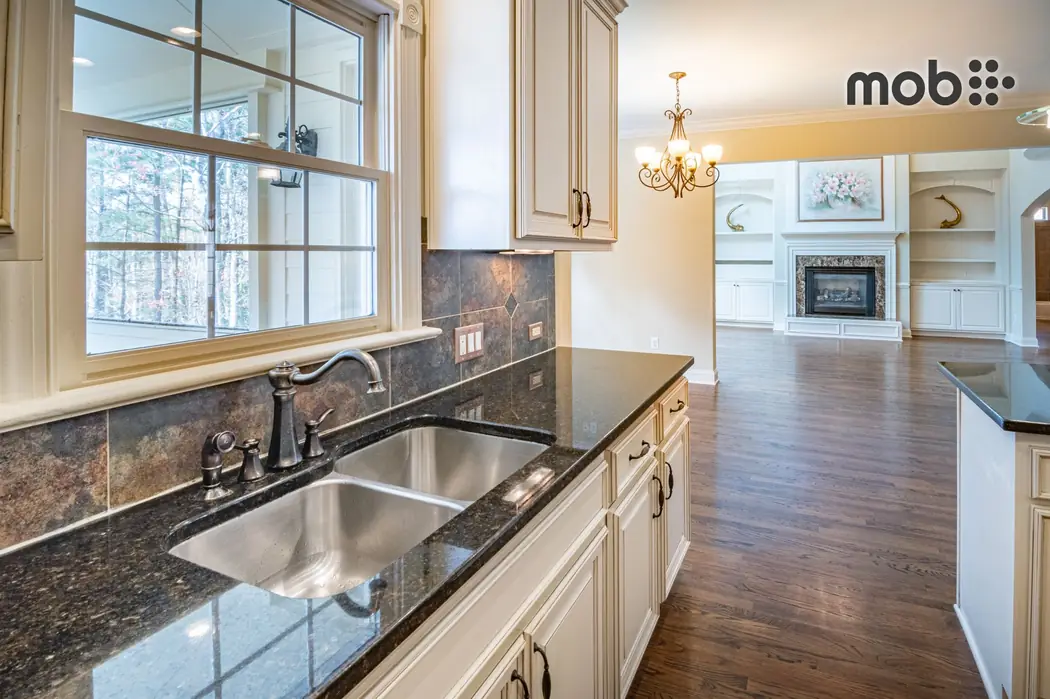
If your kitchen handles heavy Indian cookware, buy a top-mount sink. For nine out of ten Mumbai flats, a top-mount drop-in sink sitting firmly on top of the granite slab is the only installation that survives daily domestic cleaning without dropping or leaking within a year.
Undermount sinks look sleek in interior design renders because the stone edge runs cleanly across the bowl, making it easy to sweep wet vegetable scraps directly into the basin. On paper, it is modern and seamless. In a working Mumbai kitchen, however, that exposed stone cutout is glued to the rim below with nothing more than a thin bead of silicone, hanging under forty kilograms of water and vessel weight.
Six months after handover, that joint gives way. Water seeps into the sink base cabinet, swells the carcass plywood, and invites mould. Before you let your stone fabricator cut the granite slab, you need to understand the physics of the joint and decide whether your installer actually knows how to anchor an undermount bowl mechanically.
Why undermount silicone joints fail in Mumbai kitchens
Walk into any three-year-old apartment in Kandivali or Chembur and inspect the cabinet under the sink. In almost every undermount installation done on a budget, you will see a dirty brownish crust along the stone rim, or a wooden stick propping up the bowl from the floor of the cabinet. The culprit is not the stainless steel bowl. The culprit is the way granite countertops are fabricated and loaded on Indian sites.
An undermount stainless steel sink weighs between four and seven kilograms dry. Fill that same 24 by 18 inch single bowl with water up to eight inches deep, and you add thirty litres of water. That is thirty kilograms of static dead load. Now add a five-litre cast iron kadai, a heavy pressure cooker, and the repeated impact of a house cleaner scrubbing pots. The total downward dynamic load easily crosses forty-five to fifty kilograms.
Most local stone fabricators do not install mechanical clips. They polish the cutout, turn the granite slab upside down or work inside the dark carcass, spread standard acetic cure silicone along the stainless steel collar, press the sink up against the stone, and wedge two pieces of waste plywood or scrap ceramic tile underneath to hold it while the silicone cures. Once that plywood rots or vibrates loose, silicone is the only material holding fifty kilograms against gravity.
Silicone is an elastomeric waterproofing sealant, not a structural adhesive. It possesses high tensile flexibility but very poor peel strength when subjected to continuous shear and immersion. In coastal Mumbai, ambient humidity hovers above seventy percent for half the year, meaning the wet underside of the granite never completely dries out. Within six months, constant water exposure degrades the silicone bond line. The sealant stretches, a hairline gap forms at the back rim, grease enters, and the sink drops by two millimetres. That two-millimetre gap is all it takes to flood your base unit.
Top-mount sinks: why gravity is your best friend
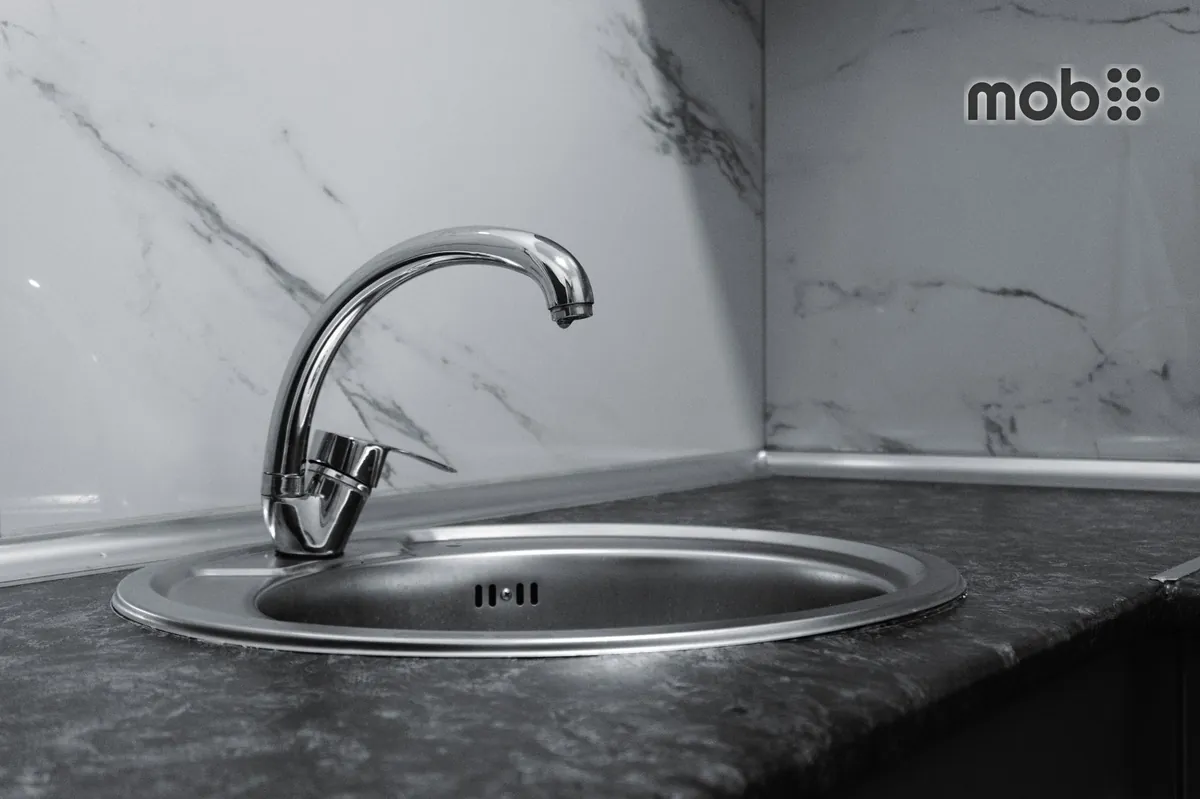
A top-mount sink, also called an overmount or drop-in sink, reverses the entire physics of the joint. The perimeter flange of the sink bowl overlaps the top finished surface of the granite by twenty to twenty-five millimetres on all four sides. The cutout in the granite is cut slightly smaller than the outer rim, meaning the stone directly carries the weight of the water and the utensils.
In this installation, silicone serves only one function: it acts as a passive water gasket between the underside of the stainless steel rim and the polished face of the stone. Gravity pushes the sink down onto the stone, compressing the silicone bead instead of tearing it apart. Even if the silicone degrades over five years of harsh detergents and warm dishwater, the sink cannot fall into the cabinet.
The practical trade-off with top-mount sinks is maintenance around the outer edge. The rim sits roughly one to two millimetres above the granite surface. When you wipe down the counter with a cloth, you cannot sweep water directly across the granite into the bowl. Crumbs and water collect at that lip. If your silicone bead was smeared carelessly during installation, that outer edge turns into a thin grey line of trapped dirt. But a dirty wipe-down line is a fifteen-minute cleaning job with a toothbrush and vinegar. A detached undermount sink requires ripping apart the plumbing trap, dropping the cabinet, and paying a stone fabricator for half a day of emergency work.
The mechanical support undermount sinks actually require
If you insist on an undermount sink because your architect designed a seamless island counter or you cannot stand the raised lip of a drop-in bowl, you cannot rely on silicone alone. You must build mechanical support that holds the bowl independently of the adhesive.
Professional undermount installation in granite requires three specific elements that standard site carpenters skip:
- Undermount slotted sink clips anchored directly into the stone using two-part epoxy and brass drop-in inserts or expansion studs. These clips grab the collar of the sink and pull it upward with threaded machine screws, applying constant mechanical clamping force.
- Structural steel support framing. For large single bowls over 28 inches or double bowls, fabricators should weld or bolt two 25x25mm zinc-coated or stainless steel angles across the carcass walls, spanning the underside of the sink bowl like a cradle. The sink rests on steel, while the silicone only seals the water gap.
- Neutral cure 100 percent silicone sealant (Dow Corning 789, Bostik, or equivalent sanitary silicone with anti-fungal additives). Never allow workers to use cheap acetic acid silicone on natural stone counters. Acetic silicone gives off a sharp vinegar smell during cure and reacts chemically with the calcium and minerals in natural stone and composite binders, causing premature debonding along the joint.
Comparing real-world kitchen performance
On paper, both styles claim to be durable. On an active site with maid cleaning schedules and municipal hard water, their ownership costs diverge rapidly over two years.
Consider the cut edge of the stone itself. With a top-mount sink, the rough internal edge of the granite cutout is completely covered by the stainless steel flange. The fabricator only needs a straight machine cut; no fine edge chamfering or buffing is needed. With an undermount sink, the cut edge of the granite is permanently exposed to your eye, your fingers, and your cooking vessels.
If you choose Indian Jet Black, Black Galaxy, or telephone black granite, the inner cut rim must be machine-cut, routed with a pencil round or half-bullnose profile, and polished through 400, 800, 1500, and 3000 grit diamond pads to match the top surface. If the cook strikes a heavy iron tawa against that exposed stone edge while washing, standard granite will chip. Once a granite cutout rim chips around an undermount bowl, you cannot patch it invisibly. You live with the jagged notch forever.
The wrong substitution: marble mastic used as sink adhesive
The most common mistake on Mumbai sites happens when the stone cutter tries to fix an undermount sink permanently by using polyester marble glue (commonly called Tenax or marble mastic) instead of neutral silicone and steel brackets.
The mason mixes the resin with hardener, pastes a thick layer under the rim, and sticks the sink to the granite. It feels rock-solid within forty minutes. You could hang from it that afternoon. But polyester resin cures into a completely rigid, brittle mass. It has zero flexibility.
Kitchen sinks experience constant thermal cycling. You dump boiling rice starch water down the drain, and the 304-grade stainless steel instantly expands. Five minutes later, you rinse dishes with cold tap water, and the steel contracts. Granite expands and contracts at a completely different rate than stainless steel. Because the polyester mastic cannot stretch, the thermal shock shears the bond within three to four months. Worse still, when it breaks, it tears chunks of stone off the underside of your counter, leaving an uneven crater that makes future silicone sealing impossible. Use flexible neutral cure silicone for the seal, and use steel brackets for the load. Never mix up the two jobs.
Top-Mount vs Undermount Sink in Granite Countertop
| Factor | Top-Mount (Drop-in) | Undermount (No Bracket) | Undermount (Properly Clamped) |
|---|---|---|---|
| Load-Bearing Mechanism | Direct stone support on all 4 flanges | Purely silicone adhesion (fails easily) | Steel brackets or carcass angles |
| Silicone Failure Consequence | Minor perimeter seep, sink stays rigid | Sink drops 2-5mm, floods cabinet | Joint stays compressed, zero drop |
| Countertop Fabrication Cost | Basic rough cut; zero edge polishing | Polished and profiled exposed edge | Polished edge plus anchor drilling |
| Counter Edge Chipping Risk | Zero; stone edge is fully covered | High; exposed granite rim takes hits | High; exposed granite rim takes hits |
| Counter Wiper Usability | Stopped by 1-2mm metal outer lip | Direct sweep from stone into bowl | Direct sweep from stone into bowl |
| Best Suited Kitchen | Heavy daily Indian cooking and washing | Not recommended under any condition | Dry kitchen, pantry, or light washing |
Which one to buy
- Choose your sink type before the granite fabricator arrives on site, because the cutout dimensions for drop-in and undermount differ by thirty to forty millimetres for the identical bowl size.
- Inspect the tap hole configuration: if using a top-mount sink, check whether the faucet mounts through the punched deck of the sink or directly through the stone behind it.
- If you select an undermount bowl, verify that your kitchen contractor has included 25mm mild steel or stainless steel carcass support rails in their cabinet quotation.
- Reject any acetic cure silicone brought to site by the plumber; demand neutral cure sanitary silicone with clear anti-fungal certification.
- Inspect the granite cut edge before installation: ensure the fabricator has rounded the top inner rim with a minimum 3mm radius to prevent micro-chipping from steel utensils.
Compare current options and place orders onMadoverbuildings (MOB).
Pricing Snapshot
| Product | Live Price | MRP / RFQ | Buying Note |
|---|---|---|---|
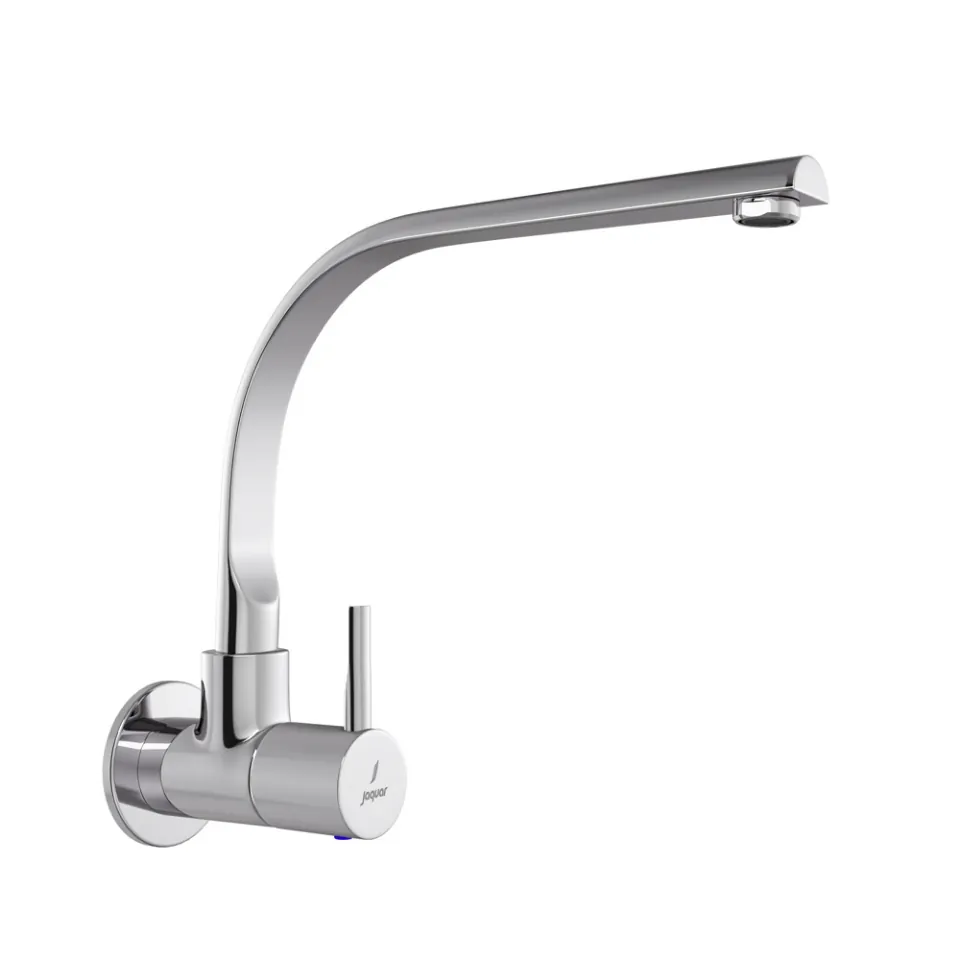
| Jaquar Florentine Prime Sink Cock with Long Extended Swinging Spout and Wall Flange, Wall Mounted, Chrome | Code: FLP-CHR-5347PMLSD | Rs 2,839.10 / Unit | MRP Rs 3,600 | RFQ Rs 2,807.20 | Stock: 12; Delivery: QWIK; Unit: Unit |
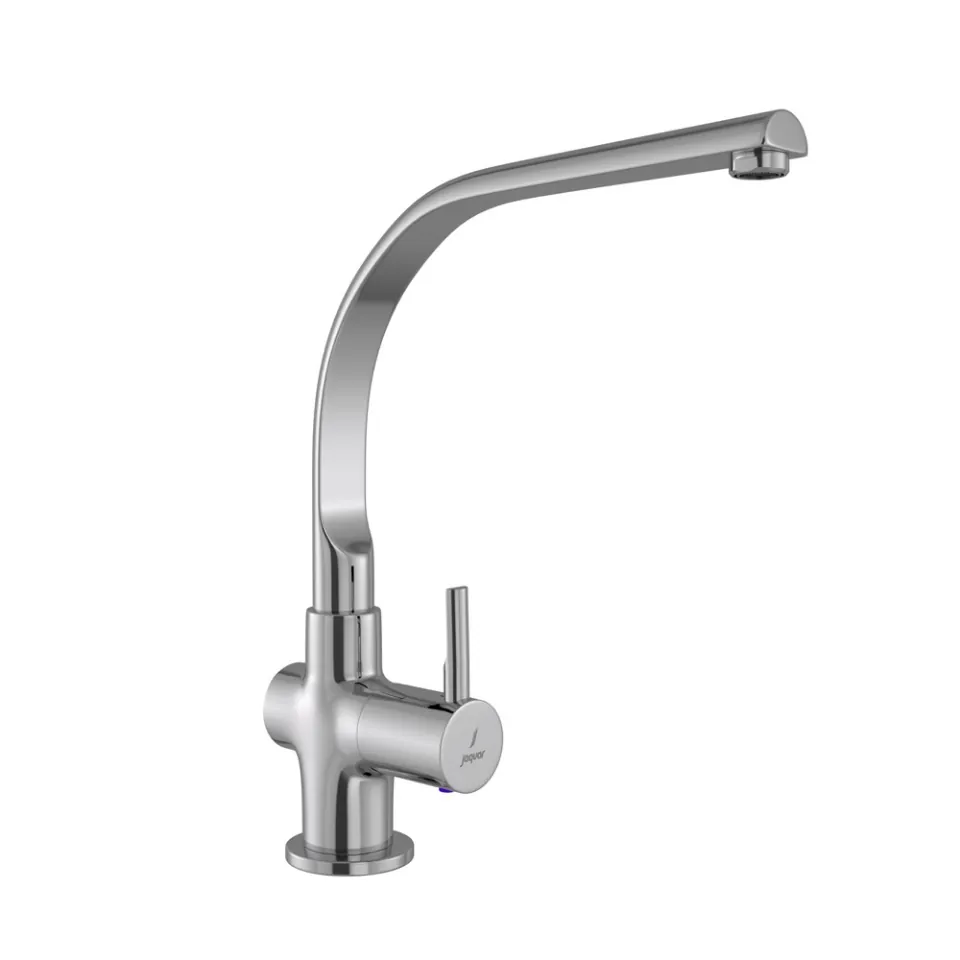
| Jaquar Florentine Prime Sink Cock with Extended Swinging Spout, Table Mounted, Chrome | Code: FLP-CHR-5357PMD | Rs 2,919.20 / Unit | MRP Rs 3,700 | RFQ Rs 2,886.40 | Stock: 9; Delivery: QWIK; Unit: Unit |
Don't substitute these
- Run your thumb along the bottom edge of an undermount cutout; if the mason left a razor-sharp cut without a bottom pencil chamfer, it will chip the first time a kadai bumps it from below.
- Never test sink drainage until the neutral silicone has cured for a full twenty-four hours; running hot water after four hours ruins the skin formation.
- If you already have a dropped undermount sink, do not re-silicone it from above; you must unhook the waste coupling, clean the old joint with isopropyl alcohol, and support it from below before resealing.
How This Plays Out on Madoverbuildings (MOB)
A site supervisor running a four-apartment fitout in Prabhadevi needed six heavy-gauge table-mounted sink cocks after the plumbing contractor altered the counter layout from wall drops to deck mounts on short notice. He pulled up Madoverbuildings (MOB), verified the exact model specs for Jaquar table-mounted swinging spout cocks, and placed the order with commercial GST invoicing directly from the site office. MOB let him lock the delivery schedule for the exact morning his granite counters were being drilled.
Relevant Products to Compare

Frequently Asked Questions
Can an undermount sink be installed in granite without clips?
No, an undermount sink should never be installed with silicone alone. Without mechanical clips or a dedicated sub-frame supporting the bowl from underneath, the shear weight of water and utensils will pull the silicone bond apart within six to twelve months. Always insist on epoxy-set anchor bolts or steel support angles across the base cabinet.
Which silicone is best for sticking a sink to granite?
Use a neutral-cure, 100 percent sanitary silicone sealant with anti-fungal additives. Do not use acetic cure silicone, because the acetic acid released during curing can react with the minerals in the stone and break down the adhesion. Neutral cure silicone remains permanently flexible, absorbs stainless steel thermal expansion, and resists mould growth.
How do you fix a kitchen sink that is coming loose from granite?
You must completely remove the sink, scrape off all dried silicone from both the stone and the stainless steel rim using a razor blade and solvent, and clean it thoroughly. Apply fresh neutral cure silicone, jack the sink tightly against the stone using a screw-jack or temporary brace, and install mechanical undermount clips or support angles underneath. Let the new silicone cure for twenty-four hours before using water.
Why does black mould form around the kitchen sink silicone in Mumbai?
Mumbai's constant coastal humidity combined with trapped dish grease and stagnant water creates an ideal environment for black fungal spores to colonise standard sealants. General-purpose construction silicone lacks chemical fungicides and breaks down when exposed to dishwashing liquids. Using dedicated sanitary-grade silicone and chamfering the bead so water drains off prevents moisture pooling.
Does granite crack easily when cutting for an undermount sink?
Granite can crack at the thin front and back bridge sections if the slab is transported or handled poorly after cutting. Professional fabricators leave a minimum bridge width of seventy-five to one hundred millimetres in front of the sink bowl and reinforce the underside of the stone with a bonded steel rod or stone strip before cutting out the opening.
Can I replace a top-mount sink with an undermount sink later?
Replacing a top-mount sink with an undermount using the existing granite countertop is practically impossible. Top-mount cutouts are rough-cut and intentionally oversized, meaning there is no clean, polished stone edge to expose, and the opening is usually too large to overlap an undermount bowl rim correctly.