

 Categories

For a 25L storage geyser in Bengaluru, install a dedicated 20A C-curve MCB paired with 4 sq mm copper wire. Electricians default to 16A breakers because the appliance plug looks like a standard three-pin 16A top. That single assumption causes more winter bathroom service calls in Sarjapur, Whitefield, and North Bengaluru than faulty heating coils ever do.
A 25-litre tank takes 30 to 45 minutes of continuous heating from a cold start. When outside temperatures drop to 15 degrees Celsius in December and January, incoming overhead tank water is frigid. That extended duty cycle pushes a 16A breaker right to its thermal trip curve, turning your morning shower into a trip down the hallway to reset the distribution board.
The continuous load maths that electricians skip
Most residential electricians calculate current on a notepad using ideal conditions: 2000 watts divided by 230 volts equals 8.7 amps. On paper, a 16A breaker seems to have plenty of headroom. Even for a 3000-watt fast-heating tank, 3000 divided by 230 gives roughly 13 amps, which still sits under 16.
Here is what happens on an actual site. Voltage across peripheral Bengaluru layouts rarely stays at a clean 230V during peak 7:00 AM winter loads. When line voltage dips to 205V or 210V, current on a 3000W element climbs above 14.5 amps. More critically, circuit breakers are governed by IS/IEC 60898-1, which rates an MCB for continuous load differently than short bursts. An MCB enclosed inside a sealed distribution board (DB) suffers from ambient heat build-up.
When an appliance runs continuously for more than 30 minutes, electrical codes require you to de-rate the circuit breaker to 80 percent of its nominal capacity. For a 16A MCB, 80 percent is exactly 12.8 amps. The moment a 3kW element draws 13 to 14.5 amps through a packed, unventilated DB board on a chilly morning, the bimetallic strip inside the 16A breaker flexes and trips on pure thermal accumulation, not a true electrical fault.
Where each option fails inside your wall
A 16A breaker fails primarily on heat soak and terminal fatigue. When current hovers near the breaker rating for 40 minutes, the screw terminals inside the DB expand and contract. Over twelve months of daily cycles, those screws loosen by fractions of a millimetre. Loose terminals create electrical resistance, resistance generates heat, and the plastic casing around the 16A breaker yellows, turns brittle, or welds itself shut.
A 20A breaker fails only when paired with the wrong wire gauge. This is the cardinal sin on speculative builder floors across Bengaluru. A contractor puts in a 20A MCB because the homeowner complained about tripping, but leaves old 1.5 sq mm or 2.5 sq mm wires inside the conduit. A 2.5 sq mm wire run through conduit in a warm brick wall has a safe continuous carrying capacity around 18 to 20 amps under ideal Indian conditions, leaving zero safety margin.
If a low-grade 20A breaker fails to trip during an overload, the 2.5 sq mm wire inside the concealed PVC pipe becomes the heating element instead. The insulation chars, binds to adjacent lighting wires, and requires cutting open the plaster to pull a fresh circuit. If you upgrade to a 20A MCB, upgrading to 4 sq mm multi-strand FRLS (Flame Retardant Low Smoke) copper wire is non-negotiable.
The socket trap: 16A plug top vs 20A DP isolator
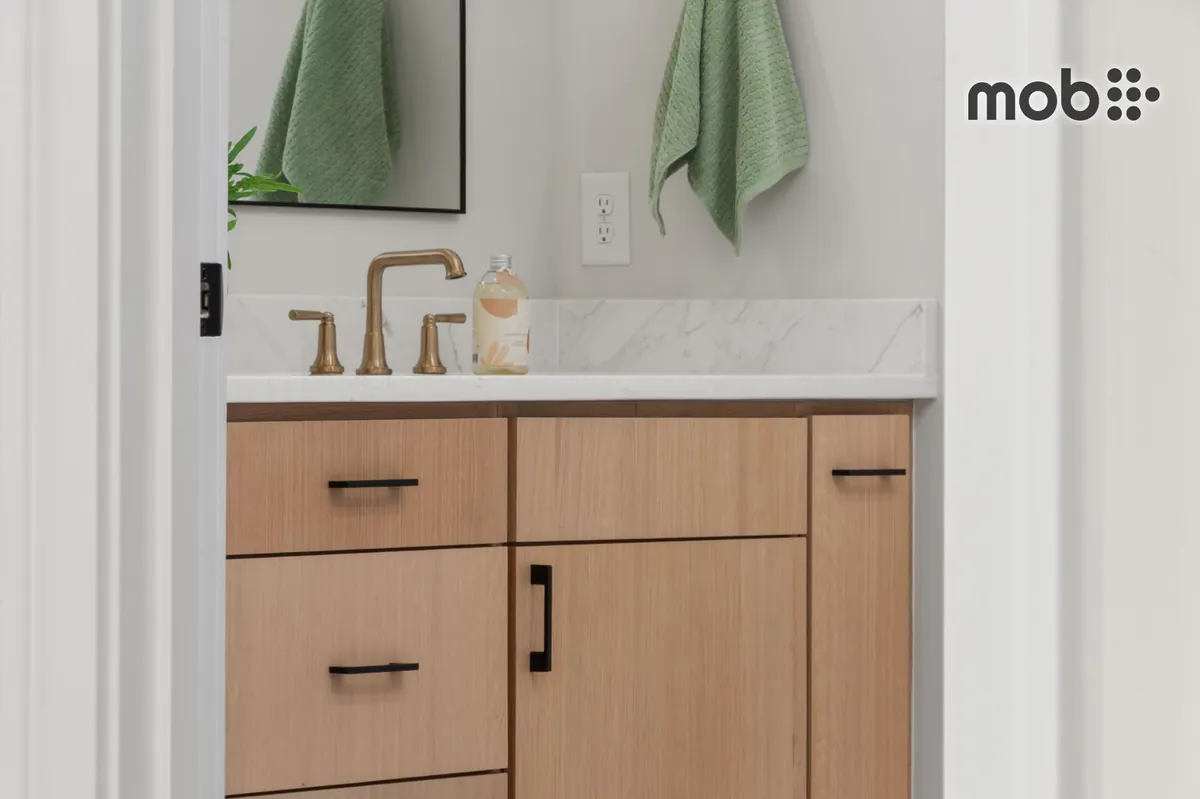
Every 25L geyser ships from the factory with a moulded 16A three-pin plug attached to its power cord. This leads homeowners and interior carpenters to install a standard 16A modular socket on the bathroom wall. That socket is the weakest mechanical joint in the entire bathroom electrical network.
Standard 16A modular sockets use spring-brass terminal leaves inside. When you plug and unplug the appliance, or when the heavy hanging cord pulls downward by gravity, the grip on the socket pins loosens. Under a 2000W or 3000W sustained load, loose brass pins spark at micro levels. You will smell burning bakelite before the winter ends, and you will find the plug top physically melted inside the socket face.
The professional fix is to eliminate the modular three-pin socket entirely. Cut out the 16A modular socket and install a heavy-duty 20A or 25A Double Pole (DP) switch with an indicator light mounted outside the bathroom door or high up on the wall away from splash zones. Terminate the geyser cable directly into the DP switch terminals or through a dedicated industrial-style unswitched junction box with ceramic connector blocks. Doing this stops terminal arcing permanently.
Reading the stamp: B-curve vs C-curve on the shop counter
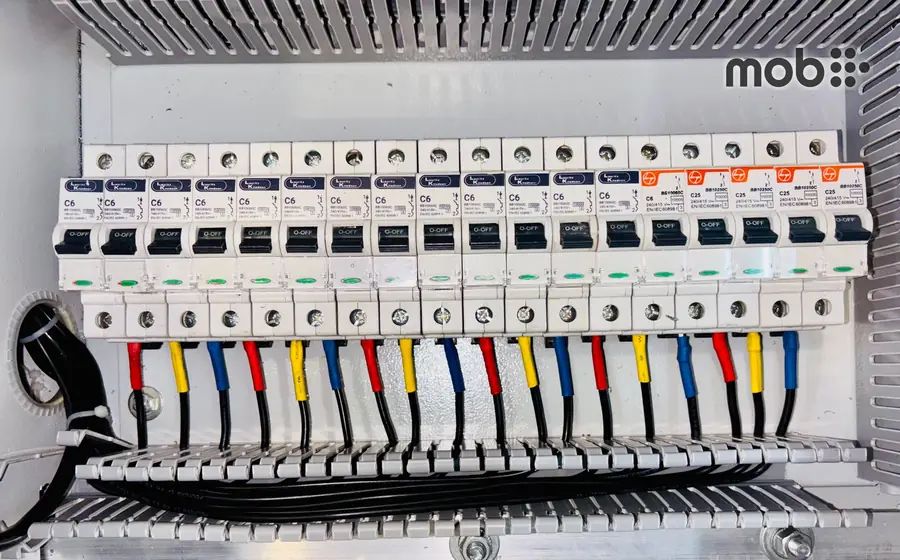
When you walk into an electrical hardware shop in Chickpet or order your switchgear, asking merely for a 20A MCB is only half the specification. Look at the letter printed right before the number on the breaker face. You will see either B20 or C20.
A B-curve MCB trips instantaneously when current exceeds 3 to 5 times its rated value. A C-curve MCB trips when current surges between 5 to 10 times its rated value. For pure resistive loads like water heaters, many textbooks suggest B-curve. However, in real Bengaluru homes sharing lines with lift motors, borewell pumps, and variable utility feeds, line spikes are frequent.
Choose a C20 single-pole MCB with a breaking capacity of 10kA (marked as 10000 inside a small rectangle on the breaker body). Cheap domestic breakers marked 6kA (6000) cost slightly less, but they fail to clear high prospective fault currents if a live line shorts inside the geyser heating tank jacket.
What you must never substitute on site
Never substitute a 25A MCB on a 25L geyser circuit to solve a nuisance trip. It is the laziest trick in residential electrical work. When an electrician finds a 16A breaker tripping, they simply snap in a 25A or 32A breaker without touching the 2.5 sq mm wire in the wall.
A 25A breaker will happily pass 28 amps of sustained fault current before tripping thermally. By the time that breaker trips, your PVC conduit has collapsed, the wire insulation has carbonised, and the internal thermostat on your water heater has melted. Oversizing the breaker to mask a nuisance trip removes the protection envelope entirely.
Another dangerous substitution is looping the bathroom geyser circuit off the bedroom AC line or bathroom light conduit. A 25L geyser must have a home-run wire: an unbroken 4 sq mm phase, neutral, and earth running straight from the bathroom DP switch into the main distribution board with zero intermediate junction boxes.
16A vs 20A MCB for 25L Storage Geysers
| Specification Factor | 16A C-Curve MCB | 20A C-Curve MCB | The Site Reality |
|---|---|---|---|
| Best Element Match | 2000W elements on short duty runs | 2000W and 3000W elements on continuous winter runs | 25L tanks take 40+ mins to heat in cold weather; 20A provides critical thermal margin |
| Required Copper Wire | 2.5 sq mm multi-strand copper | 4.0 sq mm multi-strand copper | Never run a 20A breaker on 2.5 sq mm wire; the wire becomes an unprotected fuse |
| Nuisance Trip Risk | High during peak winter mornings and voltage drops | Near zero when correctly paired with dedicated line | 16A breakers de-rate to 12.8A in warm, closed DBs, tripping under 13A+ geyser draws |
| Wall Point Termination | 16A modular 3-pin switch and socket | 20A DP switch or unswitched industrial outlet | 16A plug pins frequently overheat and fuse together under continuous heating loads |
| Breaking Capacity Standard | Typically sold in 6kA or 10kA | Standardise strictly on 10kA (IS/IEC 60898-1) | Always check the small rectangular 10000 stamp on the breaker front plate |
Which one to buy
- Check the geyser nameplate wattage: if it is 3000W, mandate a 20A MCB and 4 sq mm wiring immediately.
- Verify the wire gauge in the conduit before buying the breaker: pull the switch plate and read the wire sheath to confirm 4 sq mm before fitting a 20A breaker.
- Order a C-curve single-pole MCB with a certified 10kA breaking capacity rather than the cheaper 6kA rating.
- Replace the standard 16A modular wall socket with a heavy-duty 20A Double Pole switch with an indicator.
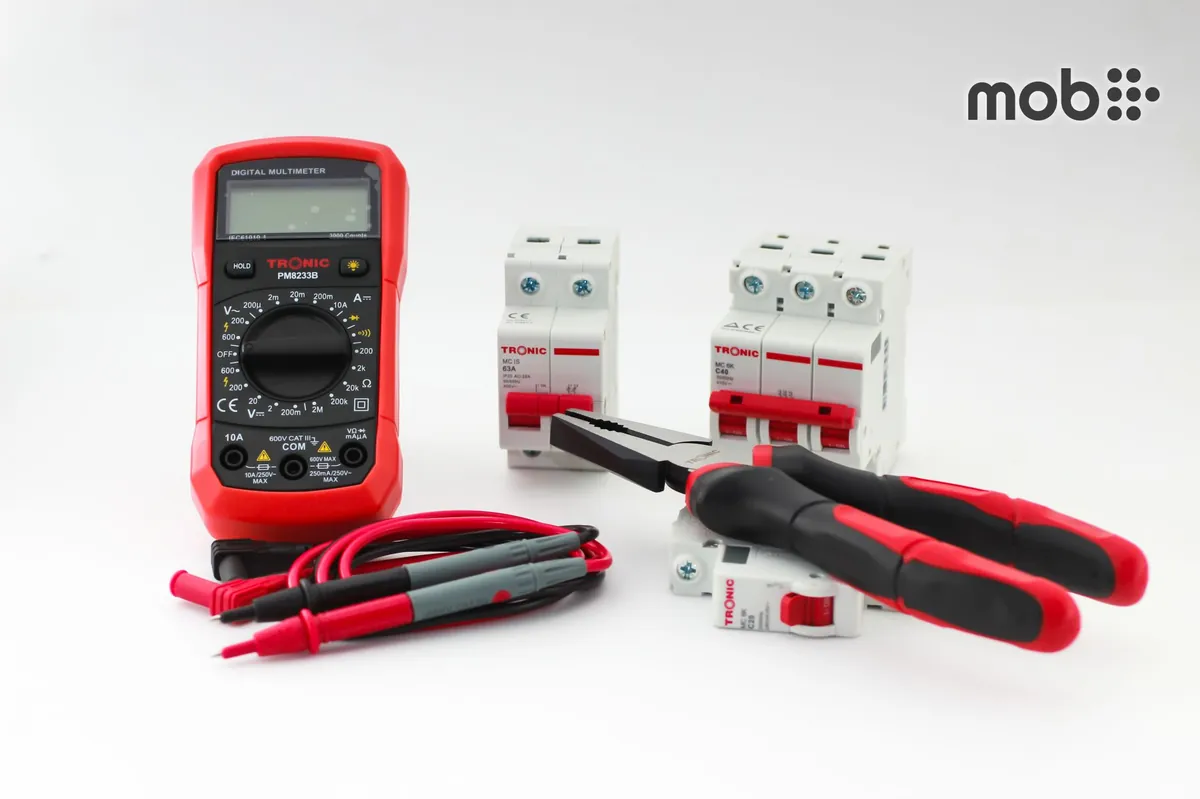
- Check all DB terminal screws with an insulated torque screwdriver two weeks after commissioning to catch post-settling slack.
Compare current options and place orders onMadoverbuildings (MOB).
Don't substitute these
- Smell the geyser socket plate after a 30-minute morning run; any sweet, fishy, or burnt plastic smell means the terminal leaves have lost tension.
- If your 25L geyser trips the RCCB instead of the MCB, the problem is not amperage; the heating element casing has microscopic pinholes leaking current to earth.
- Never twist multi-strand copper wires directly under the MCB cage terminal without crimping a pin-type copper lug first.
- Keep at least one empty module spacer on each side of the geyser MCB in the DB to let heat dissipate.
How This Plays Out on Madoverbuildings (MOB)
A building contractor handling an apartment renovation in HSR Layout was troubleshooting geysers tripping every morning across three master bathrooms. Rather than letting the site wireman guess with loose hardware store parts, he raised an RFQ on Madoverbuildings (MOB) for genuine Havells C20 10kA MCBs, 4 sq mm FRLS wire coils, and 20A DP switches. He verified the technical ratings on the live product pages and locked in his site delivery slot directly from his phone.
Frequently Asked Questions
Can a 25L geyser run on a 16A MCB safely?
Yes, but only if the heating element is 2000 watts or lower and the run is wired with dedicated 2.5 sq mm copper wire. If the geyser is 3000 watts, or if supply voltage drops below 215V, a 16A breaker will nuisance-trip during extended winter heating cycles. For trouble-free continuous operation, a 20A MCB with 4 sq mm wire is the preferred site standard.
What happens if you put a 20A MCB on 2.5 sq mm wire?
You create a severe fire hazard because the wire can overheat before the circuit breaker trips. A 2.5 sq mm copper wire in conduit has a safe continuous limit close to 18-20 amps, while a 20A breaker permits continuous current up to its trip threshold without cutting power. Always upgrade the circuit wire to 4 sq mm whenever stepping up to a 20A breaker.
Why does my 16A geyser switch burn or melt on the wall?
Standard 16A modular sockets use internal brass spring contacts that loosen over time from the mechanical weight of the cord. The loose contact creates micro-arcing and high contact resistance under a continuous 10 to 13 amp load. The resulting heat quickly melts the plastic faceplate and welds the plug pins to the socket.
Which MCB curve is best for a home geyser in Bengaluru?
A C-curve MCB (marked C16 or C20) is the right choice for home geysers on Bengaluru supply lines. C-curve breakers tolerate normal short line fluctuations and utility voltage spikes without nuisance tripping, while still providing rapid magnetic protection against dead short circuits.