Categories

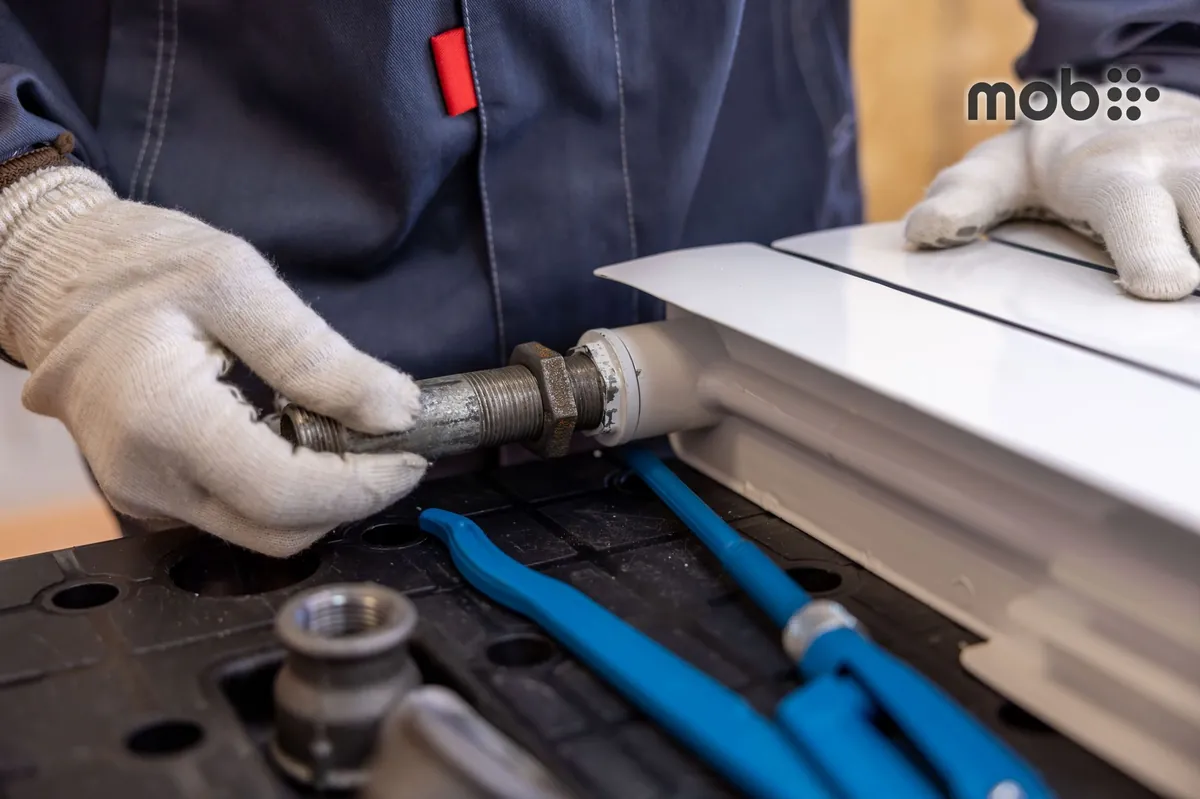
Buy heavy forged brass hex nipples for your geyser connection. For nine out of ten homes in Bengaluru running on borewell water or mixed tanker supplies, brass seals cleaner into female CPVC brass-insert elbows and resists the pitting corrosion that attacks stainless steel in high-TDS water.
Every November and December across Bellandur, Whitefield, and Sarjapur, site supervisors get the same calls. A water heater installed eight months ago starts dripping from the inlet or outlet joint right as the morning temperature drops and the geyser hits 65 degrees Celsius. The tenant blames the flexible hose, but the leak almost always starts at the nipple threads.
The metal you screw between the concealed wall elbow and the braided angle cock hose decides whether that joint survives three winters or weeps into the tile wall before the year ends.
Why winter mornings trigger geyser leaks in Bengaluru
Water expands when heated, but metals and plastics expand at entirely different speeds. A geyser storage tank heats cold inlet water from around 18 degrees up to 65 or 70 degrees Celsius within forty minutes. That rapid temperature swing moves through the hot water outlet nipple straight into the concealed wall fitting.
Your concealed plumbing is usually SDR-11 CPVC with a brass-threaded female adapter. Brass has a thermal expansion coefficient around 19 micro-inches per inch per degree Celsius, which sits very close to the brass insert molded into the CPVC elbow. They expand and contract in near harmony as hot water pulses through.
SS 304 expands at roughly 17 micro-inches per inch per degree Celsius, but it is noticeably stiffer than brass. When heated water surges through, the rigid stainless steel threads exert uneven mechanical stress on the female brass insert. Over dozens of morning heating and cooling cycles, that repeated micro-movement stretches cheap PTFE thread tape, loosens the friction hold, and opens up microscopic leak paths.
Borewell minerals and how each metal behaves
Bengaluru borewell water regularly clocks TDS numbers between 600 and 1400 ppm, loaded with calcium carbonates, magnesium, and dissolved chlorides. How these minerals react with the metal determines how long the fitting survives behind your wall.
Stainless steel grade 304 relies entirely on a passive chromium oxide surface film to stay rust-free. Dissolved chlorides in hard borewell water attack that protective barrier at elevated temperatures, leading to localized crevice corrosion right inside the thread valleys where water stays trapped and stagnant.
Brass does not depend on a delicate oxide film. While it can suffer from gradual dezincification over ten to fifteen years in aggressive acidic water, standard potable borewell water causes brass to form a stable, dull protective patina. It holds thread geometry far better under continuous exposure to scalding mineral-heavy water.
Thread galling and the plumbing tape mistake
Plumbers hate taking SS 304 fittings off brass wall elbows after two years, and for good reason: thread galling. When two dissimilar hard metals rub under torque without high-grade anti-seize paste, friction tears microscopic particles off the contacting faces, effectively cold-welding the threads together.
If an SS 304 nipple seizes inside a brass CPVC wall elbow, removing it with an adjustable wrench frequently cracks the plastic socket behind the bathroom tile. That turns a ten-minute fitting swap into a three-thousand-rupee tile-breaking masonry job.
Brass-to-brass joints do not gall. Brass is naturally lubricious and relatively forgiving. If a plumber over-tightens a brass hex nipple by half a turn, the metal threads deform slightly to seat against the mating threads instead of binding or stripping the female wall socket.
The fake brass trap at the hardware counter
The biggest site failure does not come from choosing between genuine brass and genuine SS 304. It comes from buying a chrome-plated cast iron or zinc alloy (zamak) nipple that looks identical on the shop shelf.
Counter staff often hand over bright, shiny silver nipples marked as 'heavy duty.' Many of these are cheap electroplated mild steel or zinc scrap. Zinc alloy turns brittle and disintegrates inside hot water lines within twelve to eighteen months, often snapping flush at the wall elbow when someone tries to change a geyser hose.
Carry a small pocket magnet and a flat utility knife file when checking fittings for your site. Brass is completely non-magnetic; iron jumps straight to the magnet. If a chrome fitting feels suspiciously light, scrape the outer finish on an unused thread peak: real brass reveals rich golden yellow underneath, whereas zinc shows dull, flaky grey.
How to verify genuine SS 304 if you must run stainless lines
There are industrial setups, commercial kitchens, and solar collector loops running RO-treated or demineralized water where stainless steel is specified on the plumbing drawings. In those setups, genuine SS 304 performs well because low-chloride soft water eliminates crevice corrosion.
Do not settle for generic SS stamps. Many unbranded fittings sold in local hardware markets are actually SS 201 or SS 202. Grade 201 substitutes manganese and nitrogen for nickel, making it far more vulnerable to pitting and rust spots when subjected to hot chlorinated water.
Genuine SS 304 carries an authentic mill stamp or laser-etched mark showing 'SS 304' or 'CF8'. A magnet test gives you an early clue: while cold working can introduce very slight magnetic pull to 304 threads, a strong magnetic grip indicates lower-grade ferritic steel that will pit within two seasons.
Brass vs SS 304 Hex Nipples for Geyser Connections
| Option | Best for | Watch out | When to choose |
|---|---|---|---|
| Forged Brass Hex Nipple | Bengaluru domestic geysers, hard borewell water, CPVC wall elbows | Chrome-plated zinc counterfeits sold as brass; ensure yellow base metal | Default choice for all residential storage and instant geyser wall hookups |
| SS 304 Hex Nipple | Treated municipal soft water, solar loop headers, commercial food facilities | Chloride pitting corrosion in stagnant hot water; thread galling inside brass sockets | Only when specified by drawings on low-TDS, softened water lines |
| Chrome-Plated Zinc / Zamak | Temporary dry mockups only; unfit for pressurized hot water lines | Snaps clean off inside the wall fitting; dezincifies and clogs water lines | Avoid for all permanent plumbing connections |
Which one to buy
- Check your water source: if the project runs on tanker or borewell water, write forged brass into the plumbing hardware indent.
- Specify standard 1/2-inch BSP threads with a hexagonal center body so the plumber can grip it securely with an open-ended spanner instead of damaging pipe threads with teeth pliers.
- Inspect incoming fittings with a pocket magnet: reject any hex nipple that attracts the magnet strongly.
- Scratch test one sample from the box: confirm bright golden yellow metal under the outer chrome plating.
- Instruct plumbers to wrap eight to ten turns of quality PTFE tape clockwise around the male threads, avoiding liquid solvent cements on metallic threads.
Compare current options and place orders onMadoverbuildings (MOB).
Don't substitute these
- Always buy hex nipples rather than round barrel nipples; a spanner on a hex flat will not crush the fitting.
- Skip liquid thread sealants on plastic-to-metal joints; standard Teflon tape allows clean disassembly when changing geysers.
- If your geyser outlet water runs above 70 degrees, verify that the connected wall elbow uses an authentic brass female insert, not unreinforced CPVC plastic.
How This Plays Out on Madoverbuildings (MOB)
A plumbing contractor handling fifteen apartment handovers in HSR Layout noticed dripping test plugs on hot geyser outlets right before owner inspections. He logged onto Madoverbuildings (MOB) to pull verified heavy forged brass hex nipples with clear material specs, ensuring his team replaced doubtful market fittings before the weekend handover.
Frequently Asked Questions
Which nipple is best for geyser installation in Bengaluru?
Heavy forged brass hex nipples are best for Bengaluru geyser installations. They match the thermal expansion of brass-insert CPVC elbows and resist the high chloride levels common in local borewell water.
Why does my geyser connection leak only in winter?
The extreme temperature difference between cold inlet water and 65-degree tank water causes pipes and fittings to expand rapidly. If the nipple metal expands at a different rate than the wall elbow, micro-gaps form around the thread tape and drip.
Can SS 304 nipples be used with CPVC brass-threaded elbows?
SS 304 can be screwed into brass-threaded elbows, but the joint carries a high risk of thread galling and binding over time. If minerals build up, removing the stainless fitting later can crack the concealed CPVC fitting behind the wall.
How do you identify a fake brass geyser nipple?
Scrape an inconspicuous thread ridge with a small metal file or utility blade. Genuine brass shows yellow metal underneath, whereas fake chrome-plated zinc or iron shows white-grey or silver core metal.
What size geyser nipple is standard for Indian bathrooms?
The standard size for residential geyser inlet and outlet connections across India is 1/2-inch BSP (British Standard Pipe). Always pick a hex center model measuring roughly 1.5 to 2 inches in total length to clear wall tile depths.
Does borewell water corrode SS 304 geyser fittings?
Yes, borewell water containing high chlorides and dissolved solids causes localized crevice corrosion in SS 304 at elevated water temperatures. The stagnant water sitting in hot thread valleys attacks the passive oxide film, leading to pitting.
How much Teflon tape should be wrapped on a geyser hex nipple?
Wrap eight to ten tight turns of standard density PTFE tape clockwise along the direction of the male threads. Wrapping counter-clockwise or using fewer than six turns allows water to weep along the thread spiral under line pressure.